For me,
it started way back in the mid-70's,
playing a BASIC game called Hammurabi on the Cincinnati Public Schools
mainframe. Hammurabi was one of the
earliest resource management games, and although it was only 50-some lines of
code, it was pretty sophisticated for the time.
As the player, you had to decide how much of your grain to plant each
year, how much to feed to your people, and how much to store. These were life and death decisions as far as
your loyal minions were concerned, and it often only took one bad year to
devastate your tribe.
Hammurabi
was the direct ancestor to the multitude of resource management games we've seen over the years. As the capabilities of our hardware have
improved, so has the complexity of the games.
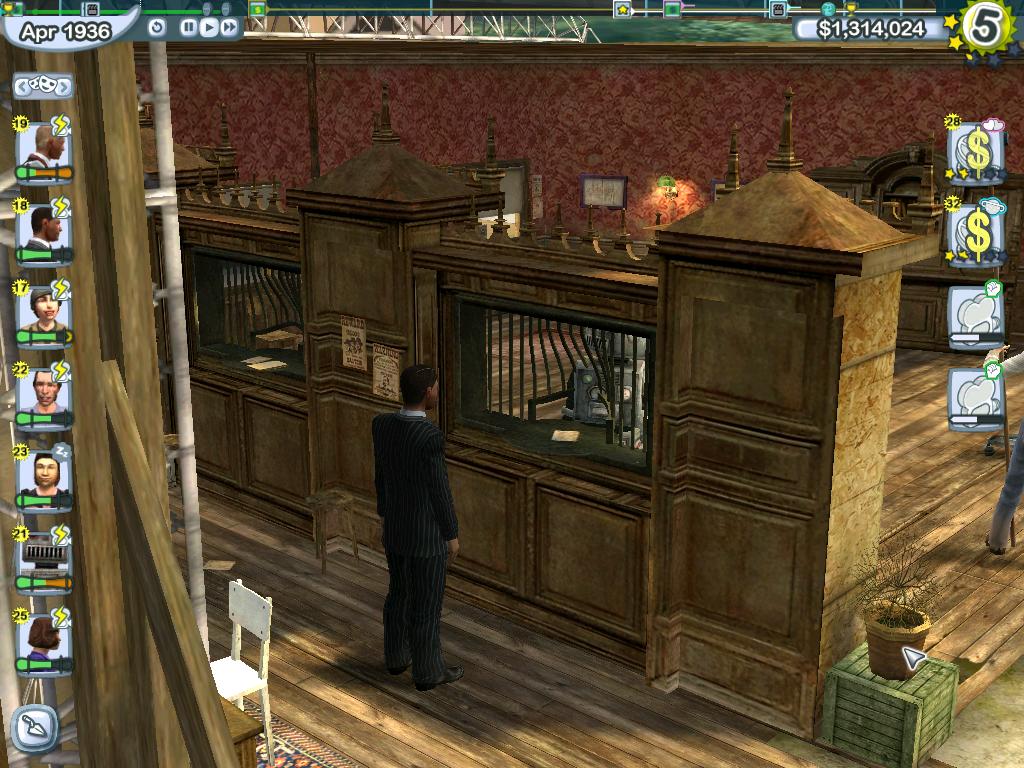
Amongst the latest iterations is Activision's
The Movies. Imagine (or don't - I'm
going to paint the picture for you anyway) a combination of Hammurabi, SimCity,
and The Sims, throw in Hollywood-style egos and ethics, and you will have some
idea of what The Movies is all about.
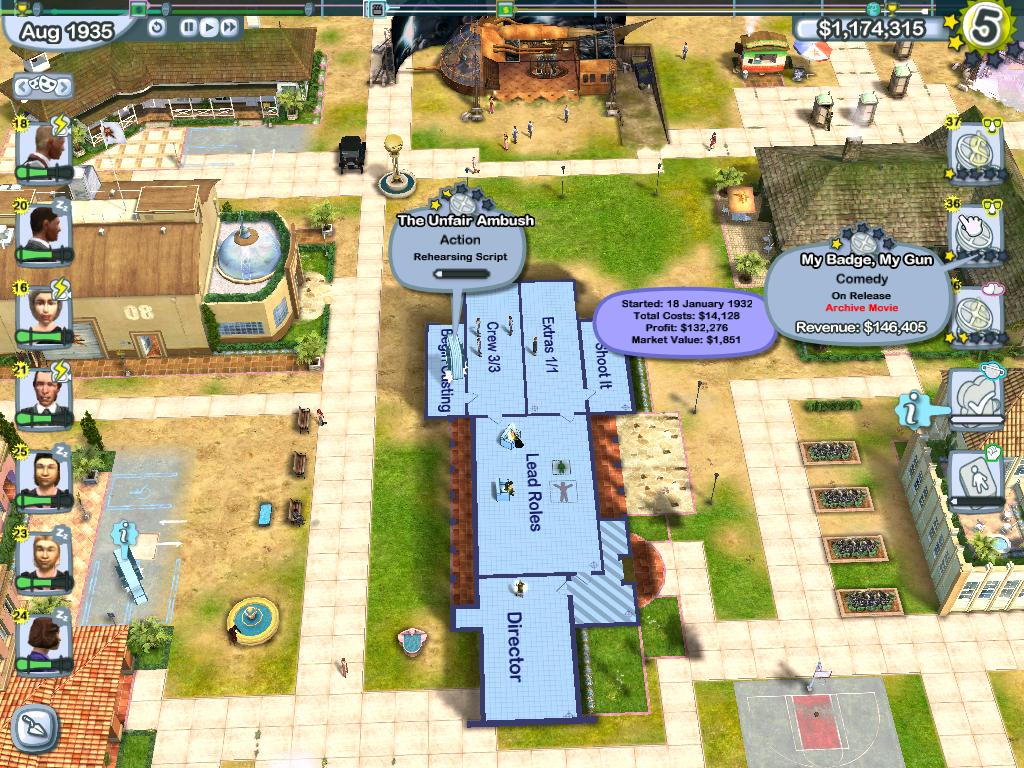
As with most games of this type, The Movies is essentially an
electronic playground, offering you the freedom to do with it as you want. You can concentrate on the business aspect,
trying to build a financially successful movie studio, or you can concentrate on
the art of movie making. You can rule
your stars with an iron fist, or you can pander to their every avaricious
demand. It's
your playground, and you decide how to play on it.
The sophistication
of The Movies is a far cry from the relatively simplistic world of
Hammurabi. You, as the studio head, are
responsible for the hiring and firing of not only the talent, but of the
hundreds of workers that it takes to run a first-class movie studio. You will be hiring the janitors that keep
your studio lot looking spiffy and clean, thereby attracting more potential
employees, as well as hiring the builders that create the sets, buildings, and
facilities that are required to create the next big box office hit. You will also being hiring actors as leads,
extras, or even directors. You will have
to hire script writers and film crews.
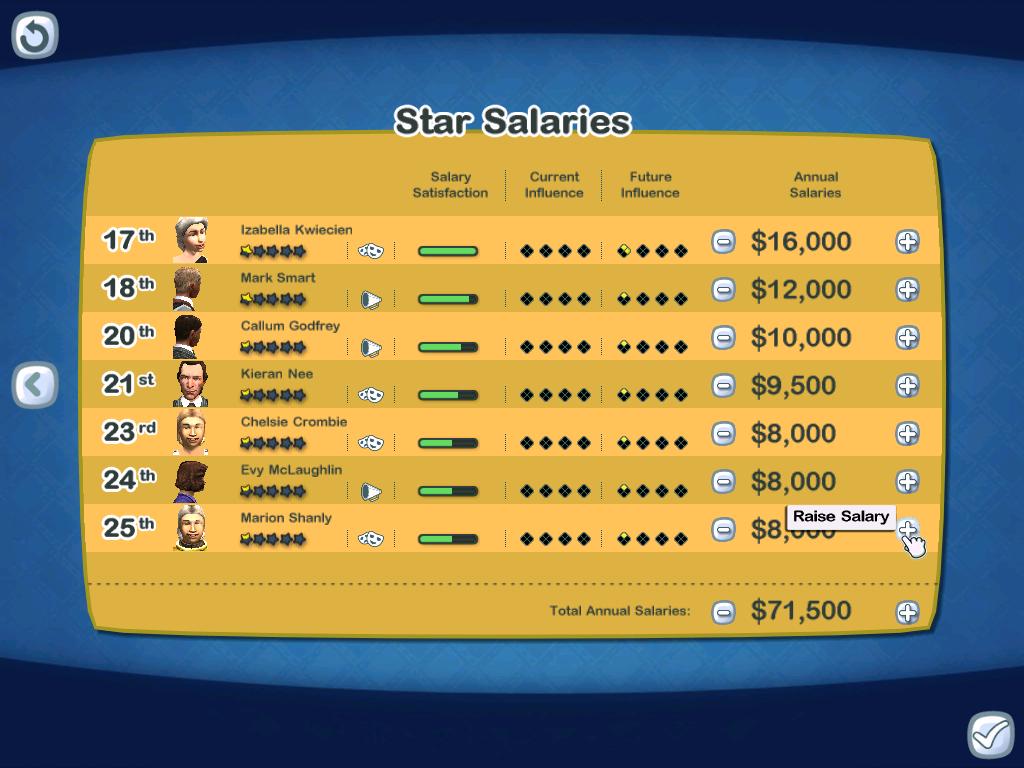
All of these people expect to be paid, so you'll
have to keep an eye on the finances as well.
Of course, in Hollywood
nothing is ever easy, and you will find that giving one unhappy star a raise is
likely to cause resentment in the others.
Damaged egos are a great excuse to deliver sub-par performances on the
set, as well as spending a bit too much time in the bars. It is your job as the Head Dude to keep all
of the workers, from janitor to box office darling, happy and productive.
Of
course, that's just the grunt
work. The real fun is making
movies. After all, that's why you started the studio in the first place,
isn't it? You open your studio in the 1920's, the early years of movie making. Your first movies
will be short, silent films, shot on grainy, scratchy, black and white
film. These are early days for you
financially as well, so you can't
afford a top-notch script writing facility.
You have a simple script writing function to perform: select the film
genre you want written from a list including horror, sci-fi, comedy, romance, and
action. Put your scriptwriters to work
on it, and in just a few days (measured in real-world minutes) you'll have a completed script. By this time you should also have had your
builders create the appropriate sets that you will be filming on. You should also have hired your first few
actors and a director, and spent some time allowing them to practice your
chosen genre on the film sets. An easy
to follow tutorial guides you through the motions required to perform all of
these actions, and the game is pretty verbose with helpful advice balloons as
you progress beyond the tutorial.
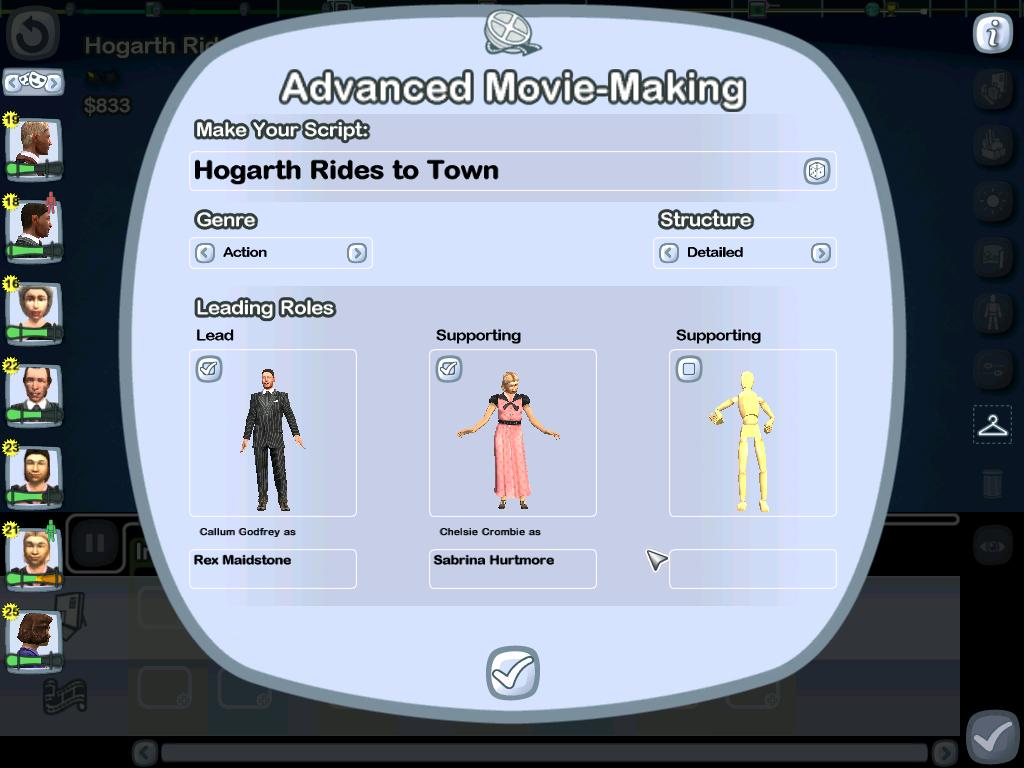
Once your
script is complete and you have your talent ready, you move your script to
Casting. Here you will assign the lead
and supporting actors, and the director.
The assignments of the film crew and extras are typically done for you
as those roles are for the most part completely fungible. This balance between requiring the player to
decide things that are significant to the game play versus having to render a
decision on banal minutiae is maintained nicely throughout the entire
game. Once you've
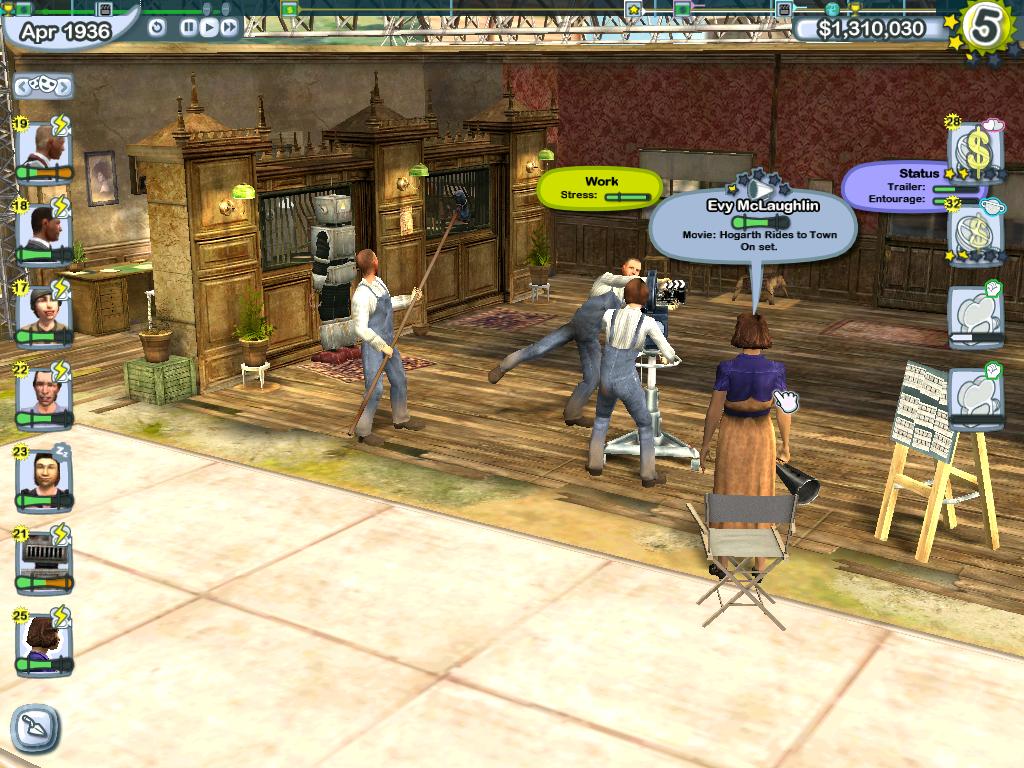
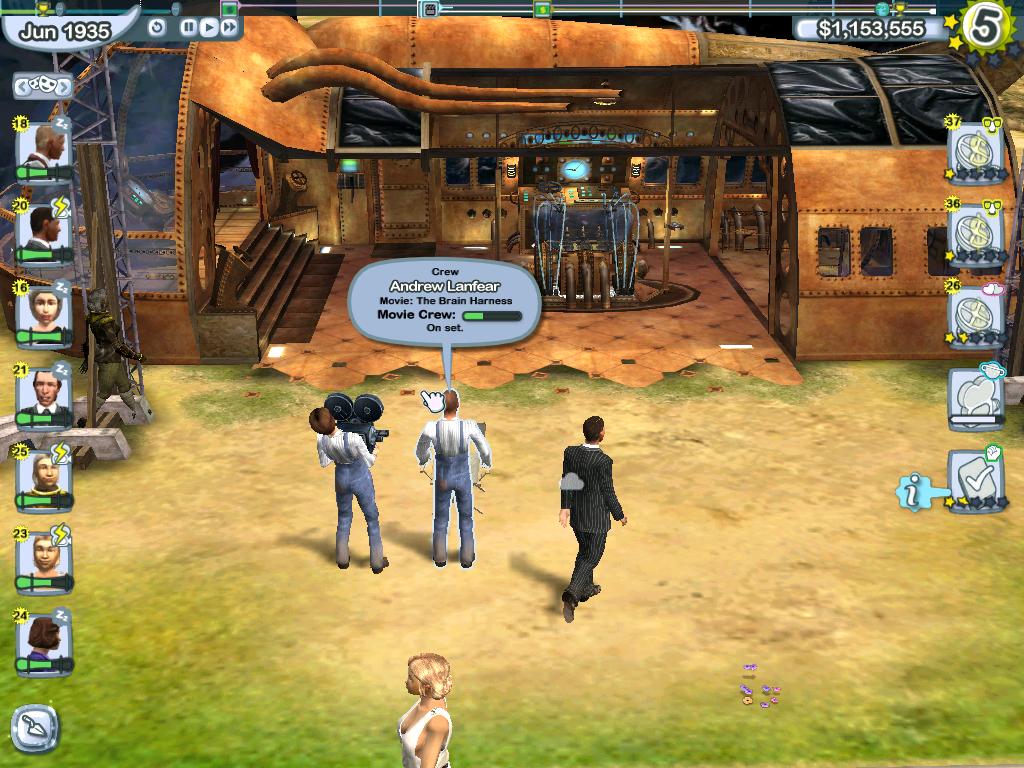
finished with casting, the movie can be moved to Production. The crew, actors, and director will meet at
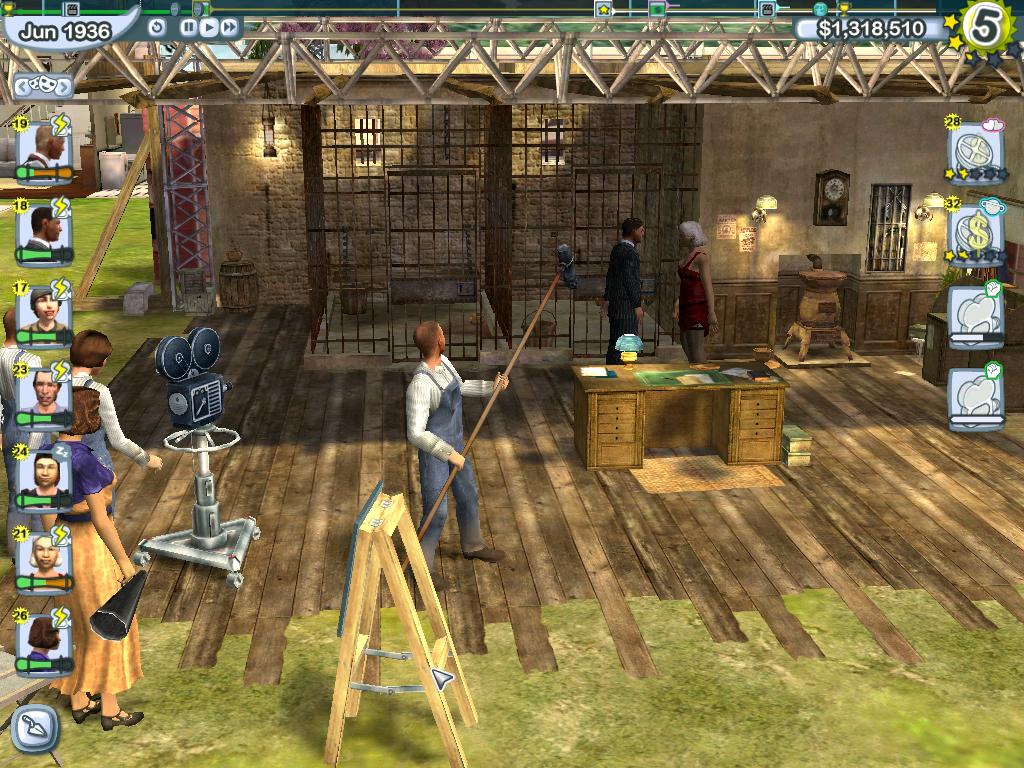
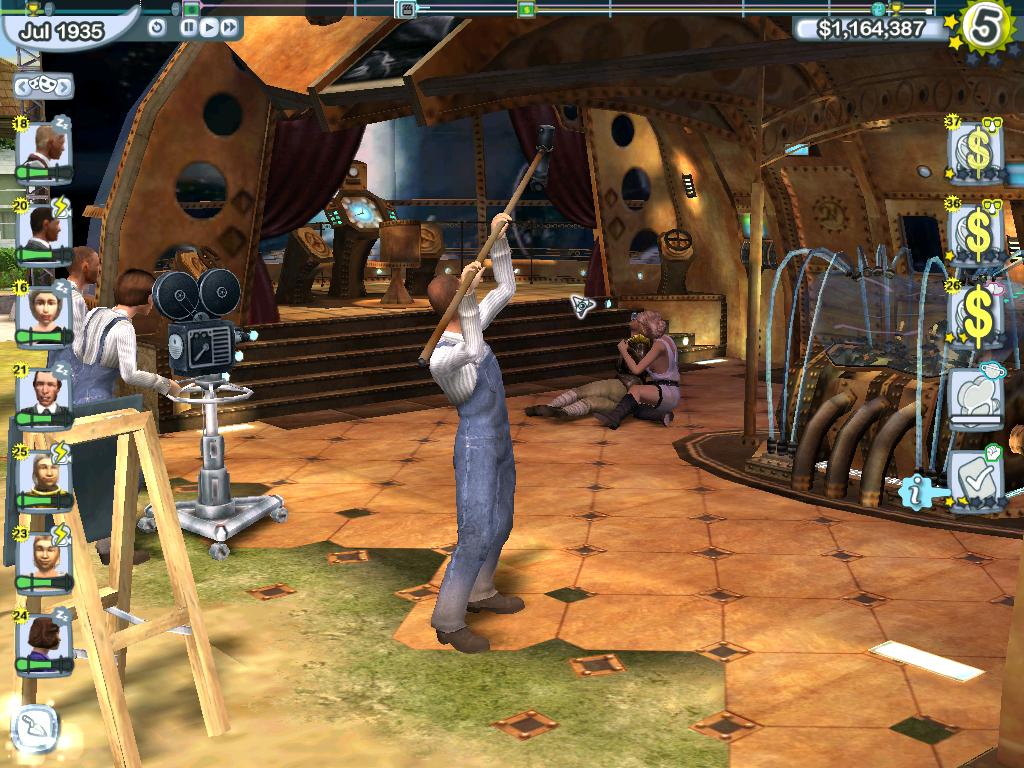
the set and shoot the film. This is all
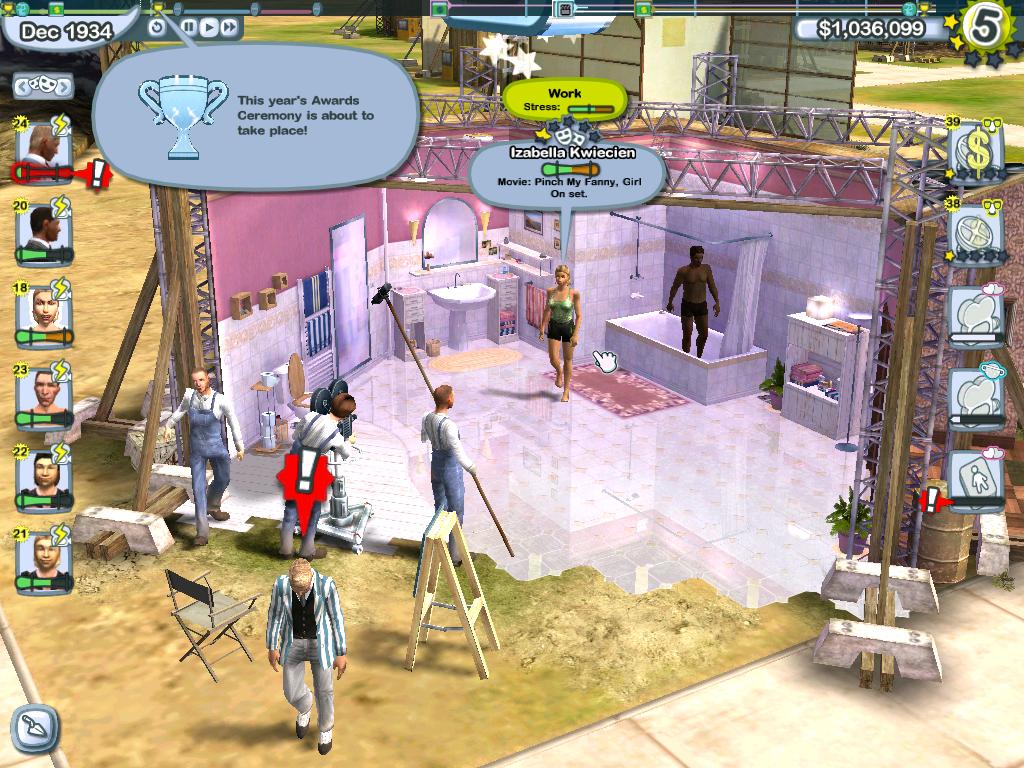
automatic, but you can zoom down into the 3D set to watch the film being
made. This is worth doing now and then,
simply to see the level of detail rendered by the game. I love watching the guy with the clapper
board thingy lean out in front of the camera and do the clappy thing to start
the scene. Wish I knew what that's called, but...
Once the
film is complete, you can watch it. It's fun to see how the technology changes through
time. Your first movies are black and
white, but if you invest wisely in Research & Design, you can be one of the
first studios to release color movies!
As you gain experience and new technology becomes available, you'll notice how the more sophisticated and realistic
sets you paid for have improved the quality of your product. Movie technology has historically been right
on the cutting edge of technology, and the studios that could successfully
apply ground-breaking technology first reaped huge benefits. Your investment in, and astute management of,
your R&D department will help give you the edge you need to stay ahead of
the other studios.
As the
chief strategist, you should also be paying attention to events outside of the
studio. To assist you with that, there
is a timeline moving across the top of your screen. You can keep an eye out for historic and epic
events on the horizon that my affect your decision making when it comes to what
types of movies to make to satisfy contemporary interests and demands. You will have to decide whether an impending
war will drive moviegoers towards the emotional release of a good comedy or the
tear-jerking romance. Your decisions
will have a profound effect on your studios success.
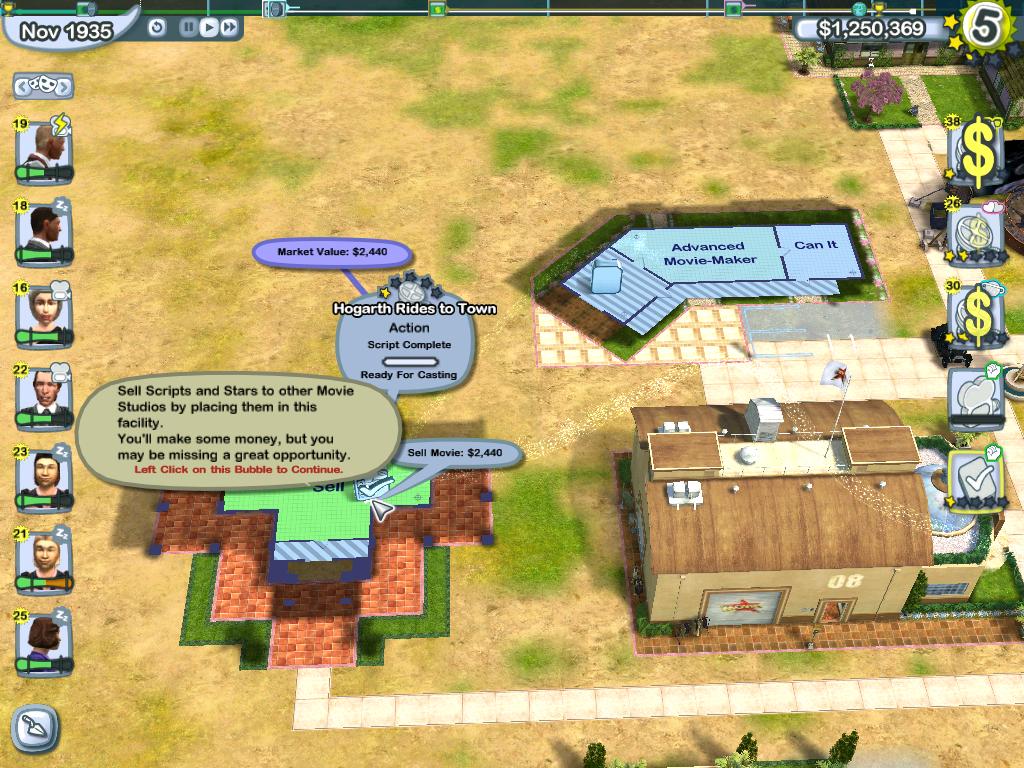
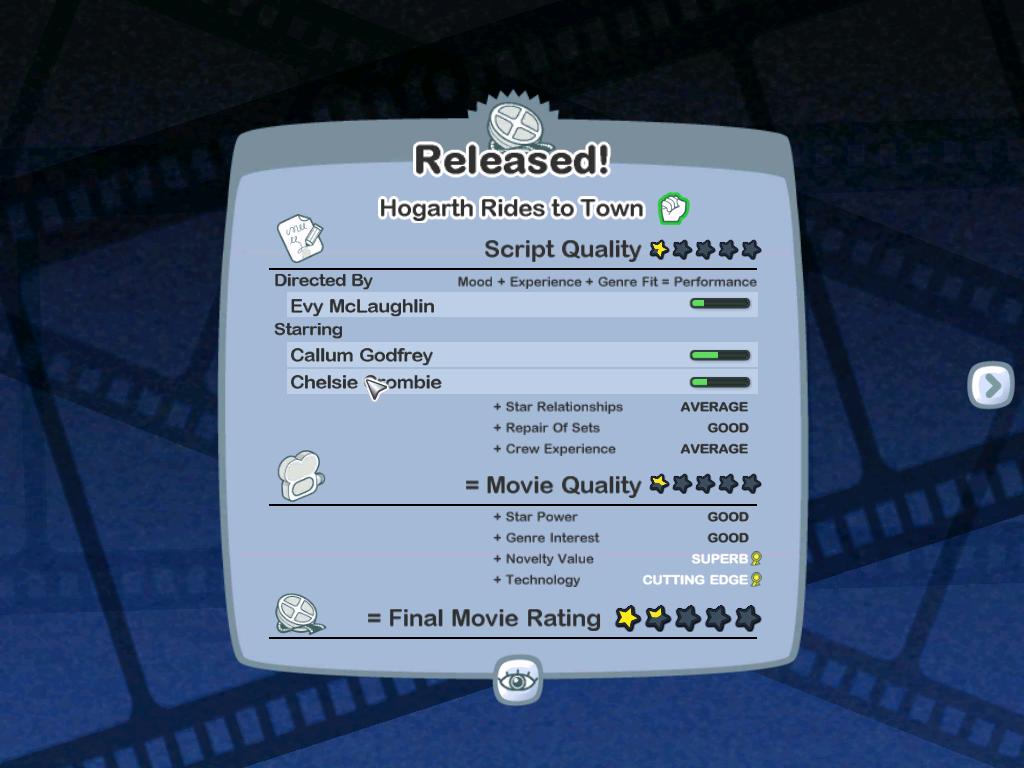
After
watching your movie, you release it by taking it to your production office, and
sit back as the money rolls in. Well,
not really. You have been hiring more
talent, writing more scripts, and casting more films while the first one was
going through the various stages of preparation. In effect, you are now acting in the capacity
of an assembly line foreman. The amount
of things you need to worry about increases as you get more and more films into
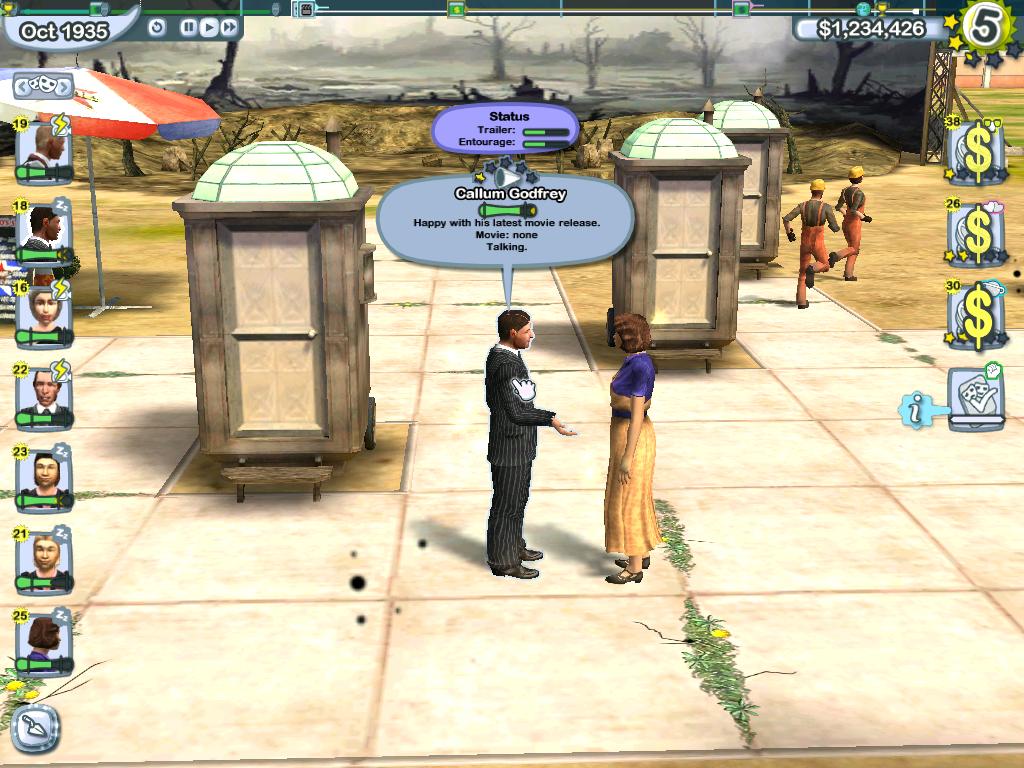
the pipeline. Fortunately, you're not yet to the era during which you would also
have to contend with egotistical stars demanding on-lot trailers and their own
entourages, so you can get your processes pretty well refined before those
distractions come up. But rest assured,
come up they will. How you respond to
their petty quibbles is up to you, either through firing them to set an example
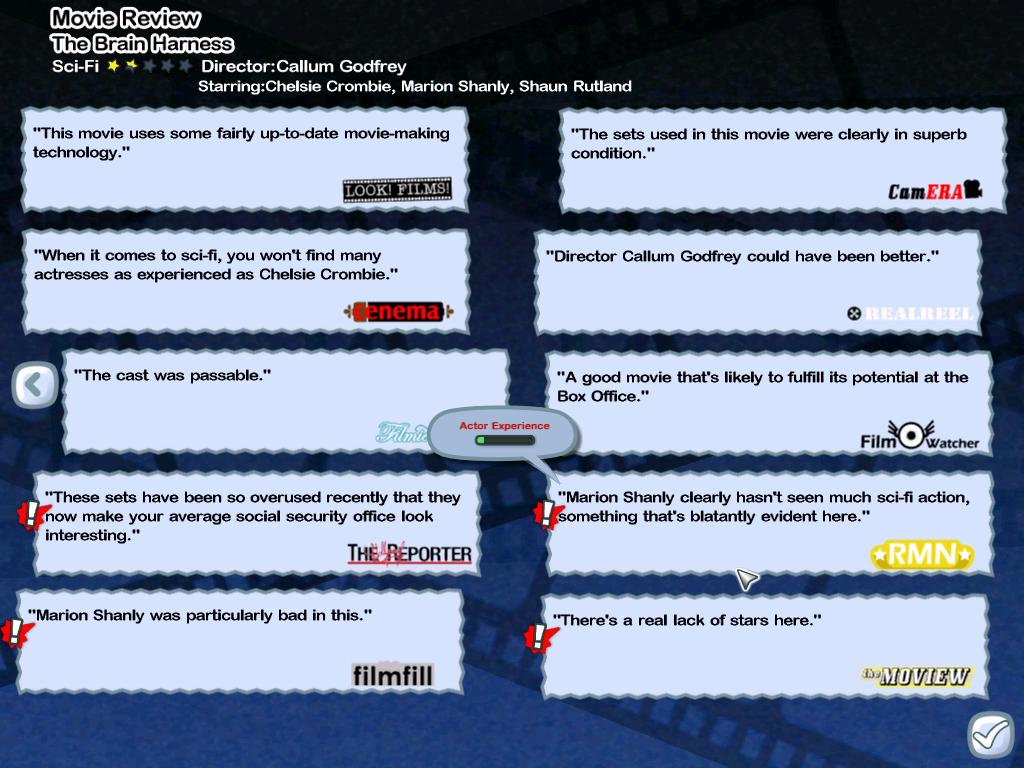
to the others, or kowtowing to their rapacious appetites. Be careful, though. An angry star is going to shovel a lot of
dirt your way with the help of the rabid Hollywood
press. You may find that you're reduced to promoting janitors to Director of
your next film since no one else will want to work for you. Ask me how I know...
If what I
have described thus far is all The Movies did, it would be well worth
the purchase price. The amazing strength
of The Movies is how well it
takes the best aspects of the "development planning" SimCity
genre and combines it with the "personal relationship" TheSims
genre, while also providing a fascinating look inside the world of an equally
fascinating industry. The Movies
takes the next step, though. It goes
well beyond providing an entertaining and educational resource management
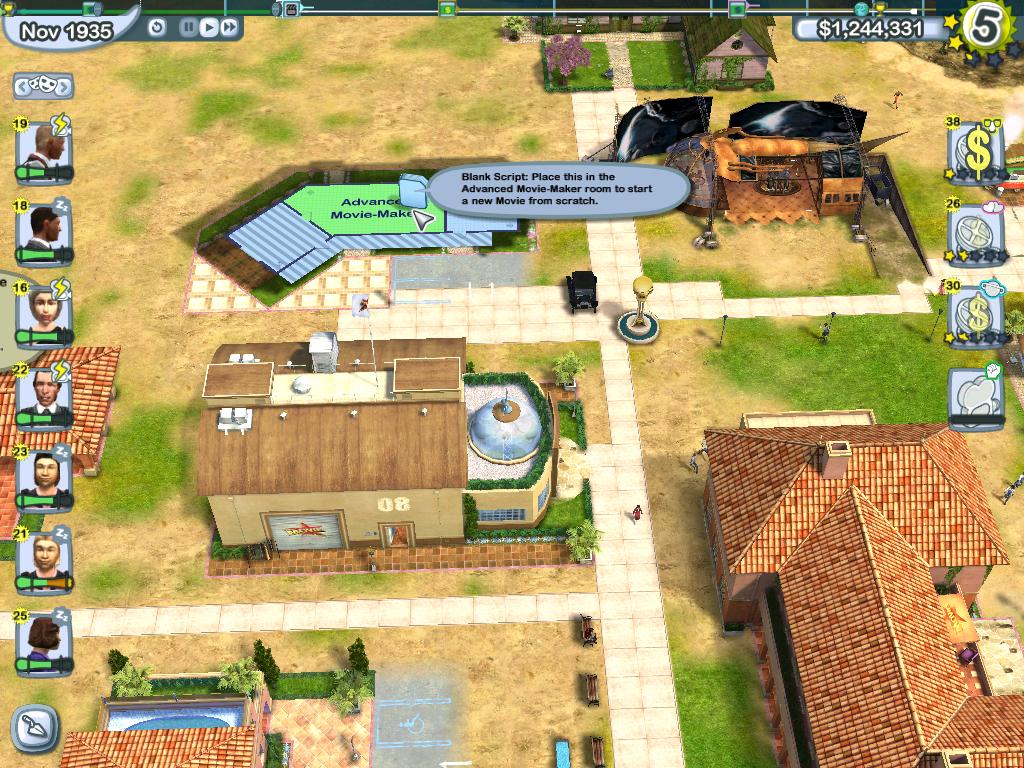
game. As you progress in the game, your
studio becomes successful enough to build a custom scriptwriting faculty. And when you build it, you will unlock the
ability to write your own scripts. And
this is very, very cool.
The
custom scriptwriter is a collection of tools that you use to create your
movie. You select the genre and how
complex you want the script template to be, or you can choose freeform if you
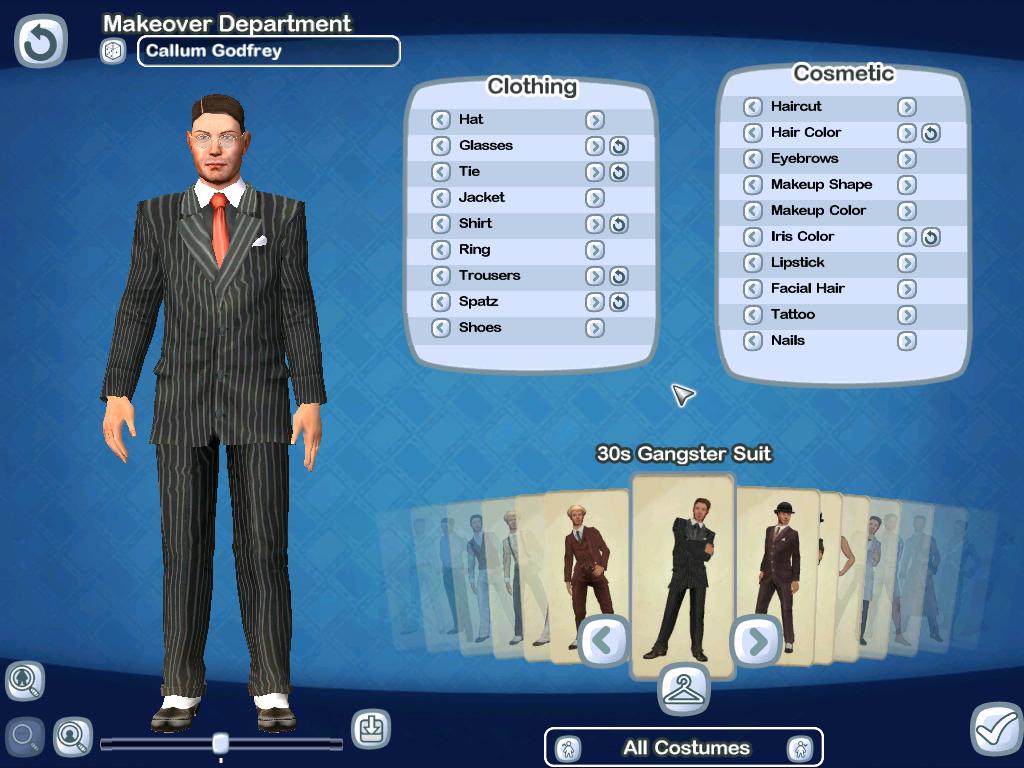
don't want a template. You assign actors, select costumes and props,
and choose sets. As with the rest of the game, there is quite a bit of detail
that you can change, or you can just leave things at their default settings. There is a timeline of your movie upon which
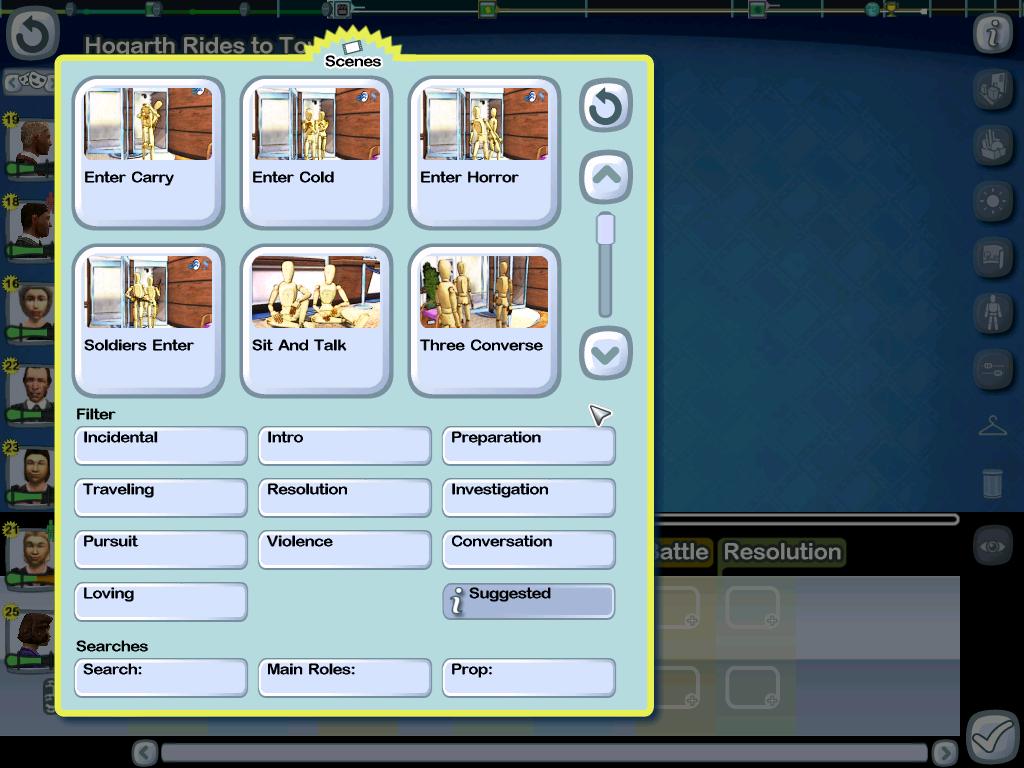
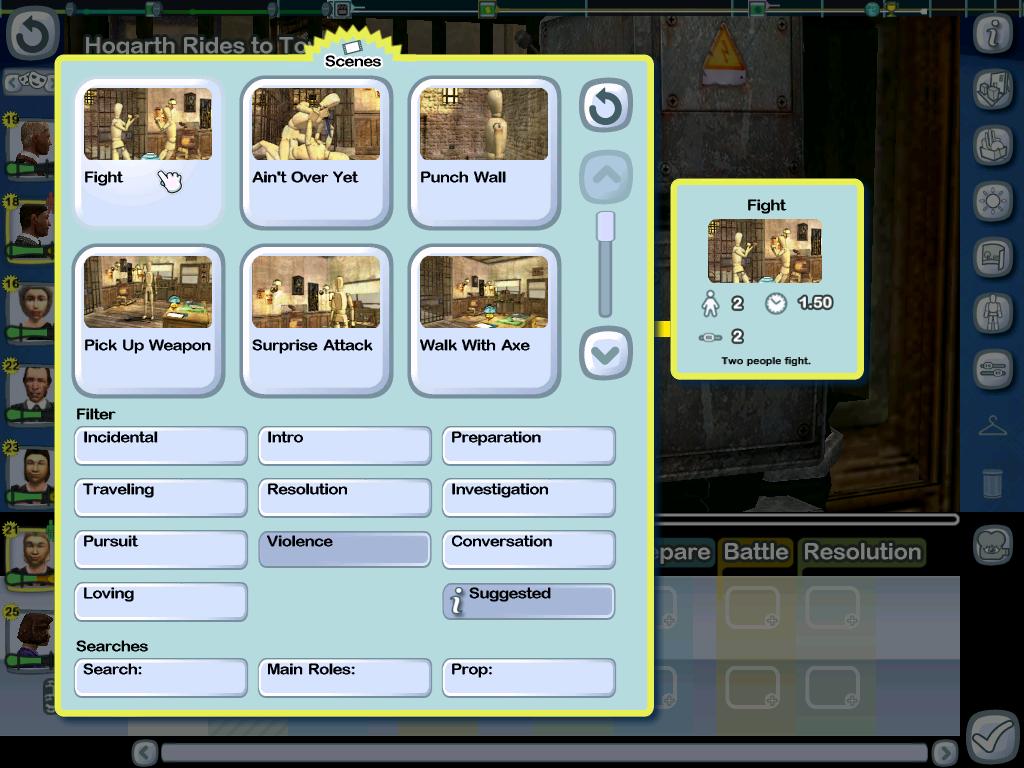
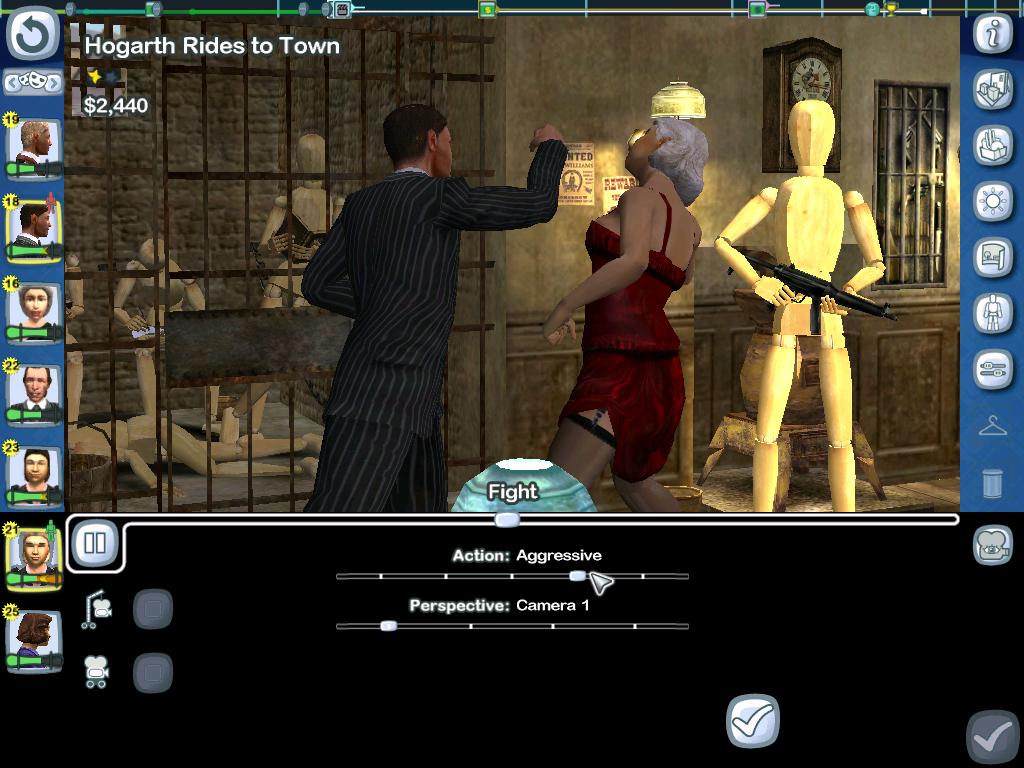
you creates scenes. To create a scene,
you select it from a menu. There are
many scenes provided, offering action such as 'Two
enter room', 'three
argue', and 'drink
poison' to choose from. It’s almost like a Lego set with the scenes
being the little plastic pieces that you put together to create your
masterpiece. You place and edit the scenes, and before you know it, you have a
script. You can then send your script
through the production process and release it.
If you did a good job, you'll
make a lot of money. If not, you'll still make enough to cover your expenses.
I can see
how some players would see the custom scriptwriting as the best part of the
game, and I can also empathize with those that are more intrigued with the business
aspects and would just as soon leave the scriptwriting to the
scriptwriters. Fortunately, the
designers seemed to realize that different players might want to concentrate on
different modalities. You are free to
take either approach, or even a combination of the two. Creating your own movies will take a lot more
time, but if you're good at it, you'll feel even better about the contributions you
make to the success of your studio. What
about the ones I made? Well, they made
Steamboat Willy look like Gone With the Wind. But they still made money!
The Movies is a solid, well
designed, and eminently playable game.
The depth and intricacy of the aspects of the movie making industry
offered to the player will ensure that this one stays on your hard drive for a
long, long time. And hey, you might even
learn a few things about operating a major business as you play.