Order of War Interview
Written by Charles Husemann on 9/22/2009 for
PC
More On:
Order of War
The folks at Wargaming.net seem to fly under the radar a bit but they've turned out some great games over years. We recently had the chance to talk to them about their new game Order of War which is now in stores.
Can you introduce yourself, talk about your role on the project? How did you get into game development and what's one thing that you love about the industry?
Hi, my name is Victor Kislyi, I’m the CEO of Wargaming.net. As for my role on the project, well, I “poke my nose” into day-to-day work of all company’s departments, focusing mostly on game and level design. I got into game development at the age of 6 or 7 when my elder brother and I started playing and making board games. We used the carpet on the floor of our bedroom as a map and moved hand-made archers, horsemen and infantrymen across it.
One thing that I love about industry? Well, I think it’s the feeling that you never know what your next project is going to be about. You can experiment with ideas until you finally find the ONE that will definitely revolutionize the genre :D .
What is the inspiration behind Order of War?
Order of War is the result of many years of hard work. When Wargaming.net started developing its first game, DBA Online, back in 1998, the company consisted of a dozen people (we were college students then, obsessed with the idea of making a computerized version of a famous board game De Bellis Antiquitatis). With every new project we gained priceless experience and useful knowledge, all the while building up a team of keen enthusiasts. There were hard times but we never stopped, gradually moving forward. And one day we realized that we were ready for a BIG game. That’s when we decided on making Order of War. Today Wargaming.net numbers more than a hundred employees, each putting all his/her energy and effort into the game.

How much of a focus is authenticity in the game? Do you feel you have to give up some realism to keep the game entertaining?
That’s a good question. In Order of War we tried to find a compromise between realism and captivating gameplay. We used tons of archive data (books, photos, engineering drawings, historical magazines etc.) to make sure that the models of military hardware look authentic and historically accurate and have their real combat characteristics. Each faction has strengths and weaknesses based on their real world counterparts. Our battles are set in and designed based on real world battles from the 1944 campaign. The same goes about the game locations and storyline. Actually, we have an entire department responsible for research and documentation study. It’s fair to say that we have a significant amount of realism in the game. For history and war buffs, this is the game for you in that regard.
Moreover, we closely cooperated with historical consultants from the USA who lent assistance to our game designers with particularly tricky issues.
At the same time, this is a game, so there are some things in our game that are by no means realistic. For example, when you call in reinforcements, they appear quickly from certain points at the edge of the map, rather than coming from a rear base far away on trucks and planes. Nobody wants to wait forever to get units – that’s not effective and exciting gameplay! So yes, there are compromises but we think we balanced out the realism with the needs of game design really well. .
Wargaming.net's previous games have all been set in the future, why the decision to change things up and work with a time period in the past? What did you learn from your previous games that you're using in Order of War?
I guess that after years of work with sci-fi we just wanted to switch to something different. When deciding on the setting of a new project (there was no Order of War then :D) we considered several options: WWI, WWII and some kind of futuristic conflict set up on the Earth or other planets. We chose WWII for several reasons. Firstly, the weapon types utilized by WWII armies perfectly fit our game mechanics. Secondly, with WWII theme you get a ready-made storyline, and characters, so there’s no need to create a new world. Thirdly, the memories of this war are still fresh and people are eager to learn new details about the conflict.
As for the second part of your question, in a nutshell, we learned how to make QUALITY strategy games. For example, work on DBA Online and Massive Assault Network 1, 2 taught us many important things about multiplayer and work with community. In Massive Assault: Phantom Renaissance we, for the first time, used cinematic camera, which, after being optimized, moved to Order of War.
We've seen a long line of WWII strategy and FPS games over the last three to four years, what is Order of War doing that's different from what we've seen in the past? How do you fight the WWII fatigue that seems to have settled in the video game industry as of late?
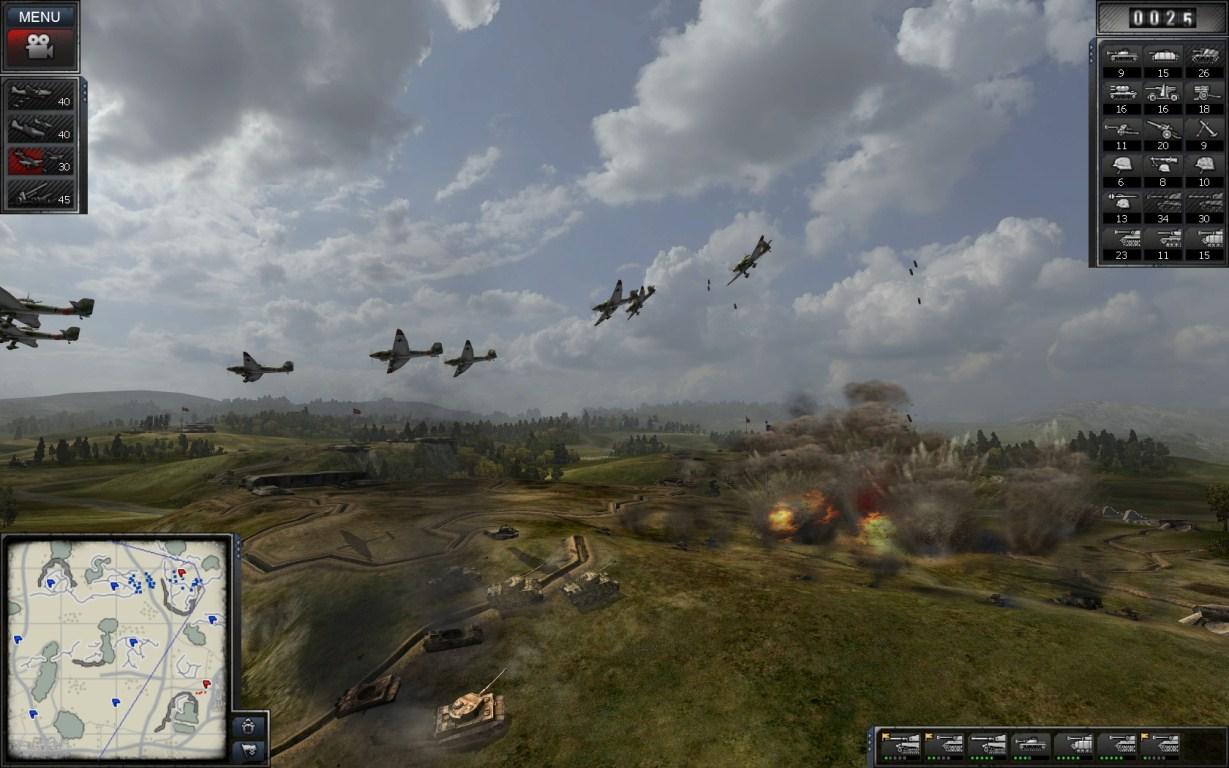
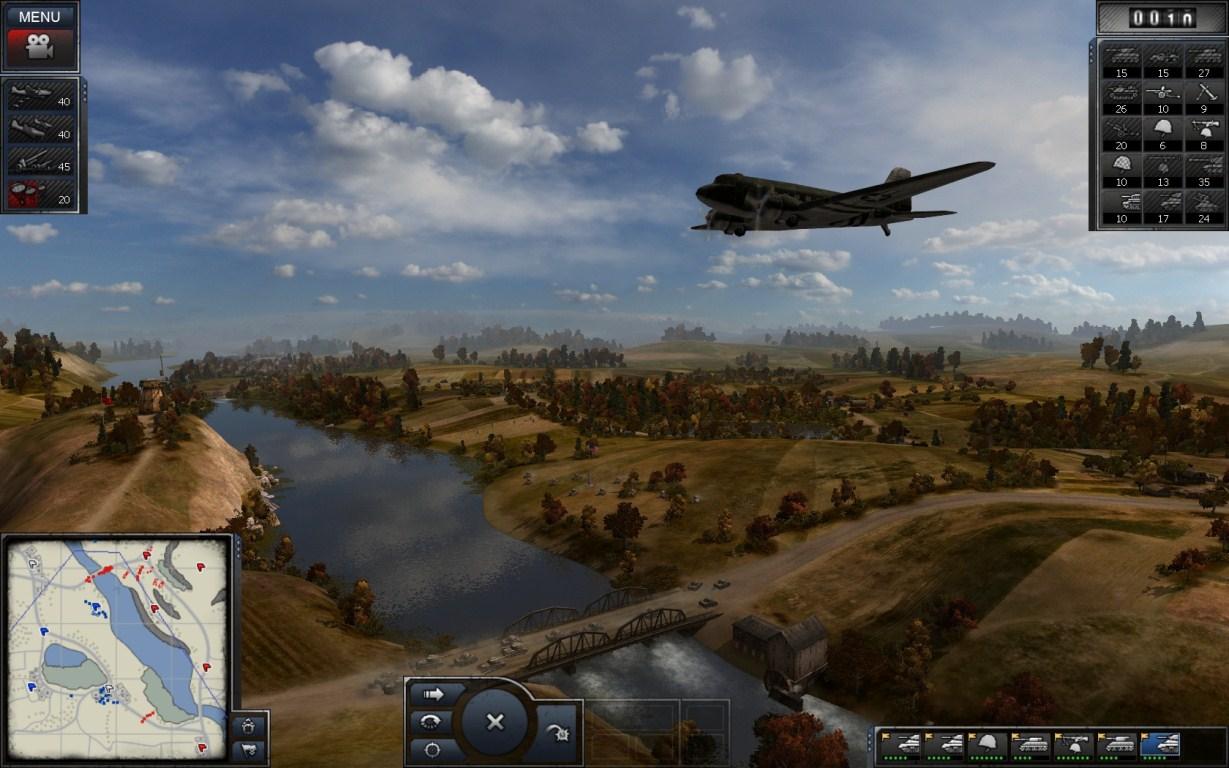
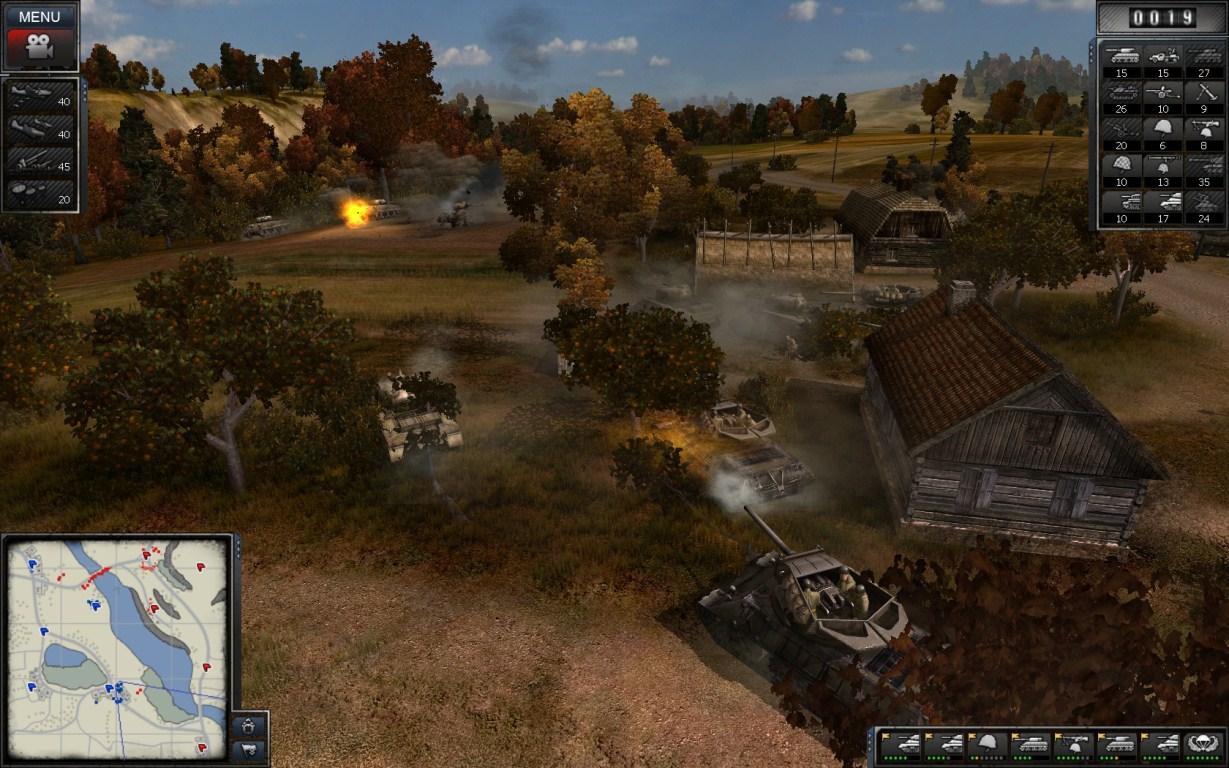
Order of War offers a unique combination of stunning graphics and large-scale warfare that will definitely pick up interest of any strategy fan. You know, there are many real-time strategies where the player wins WWII key battles having only several tanks or SPG’s and a bunch of soldiers to operate with. Our idea was quite different, that’s why while working on Order of War we focused on setting up really huge clashes bringing the player in command of a whole army like it is done in Total War series. Some operations fit up to 1000 units onscreen representing each side of the conflict.
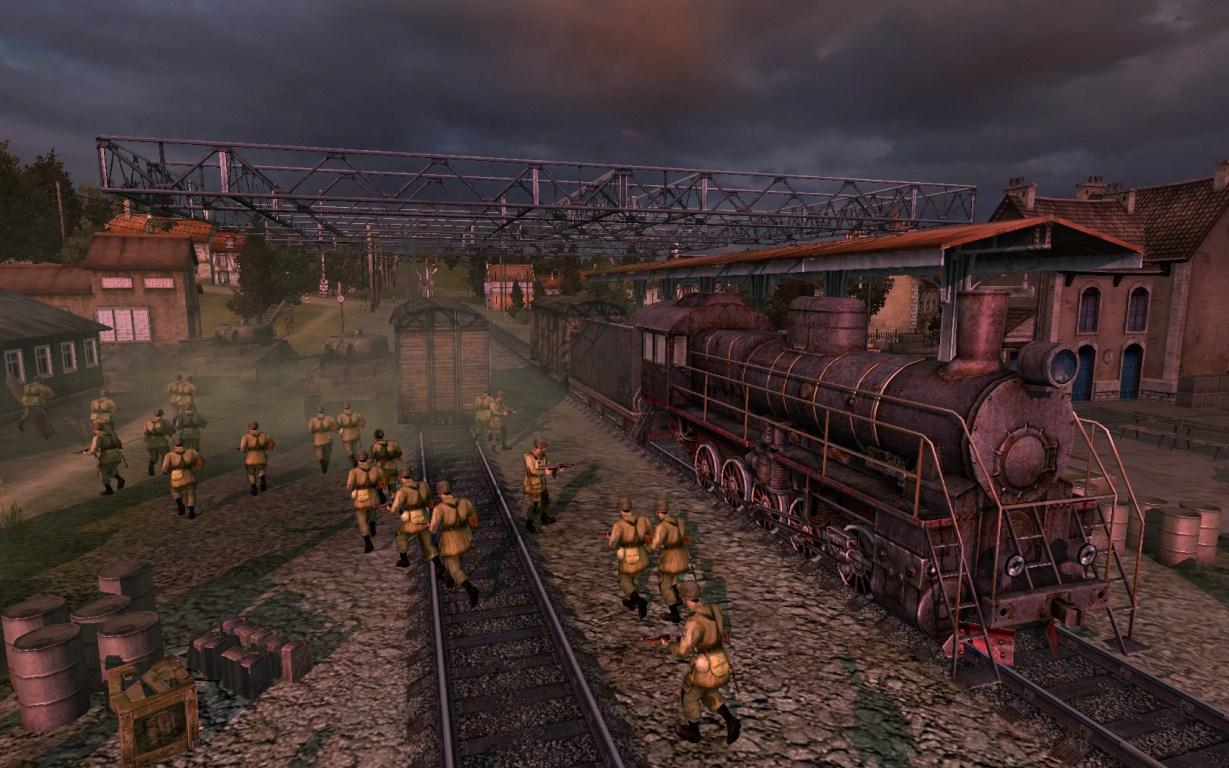
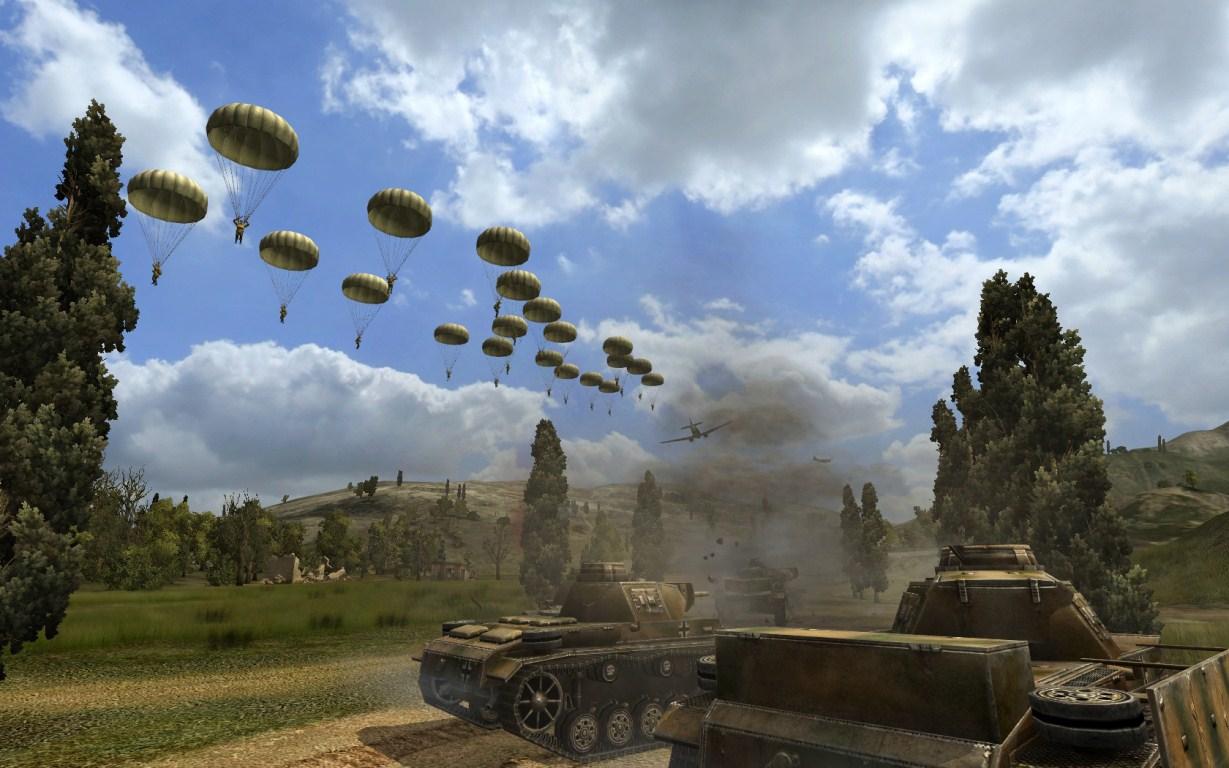
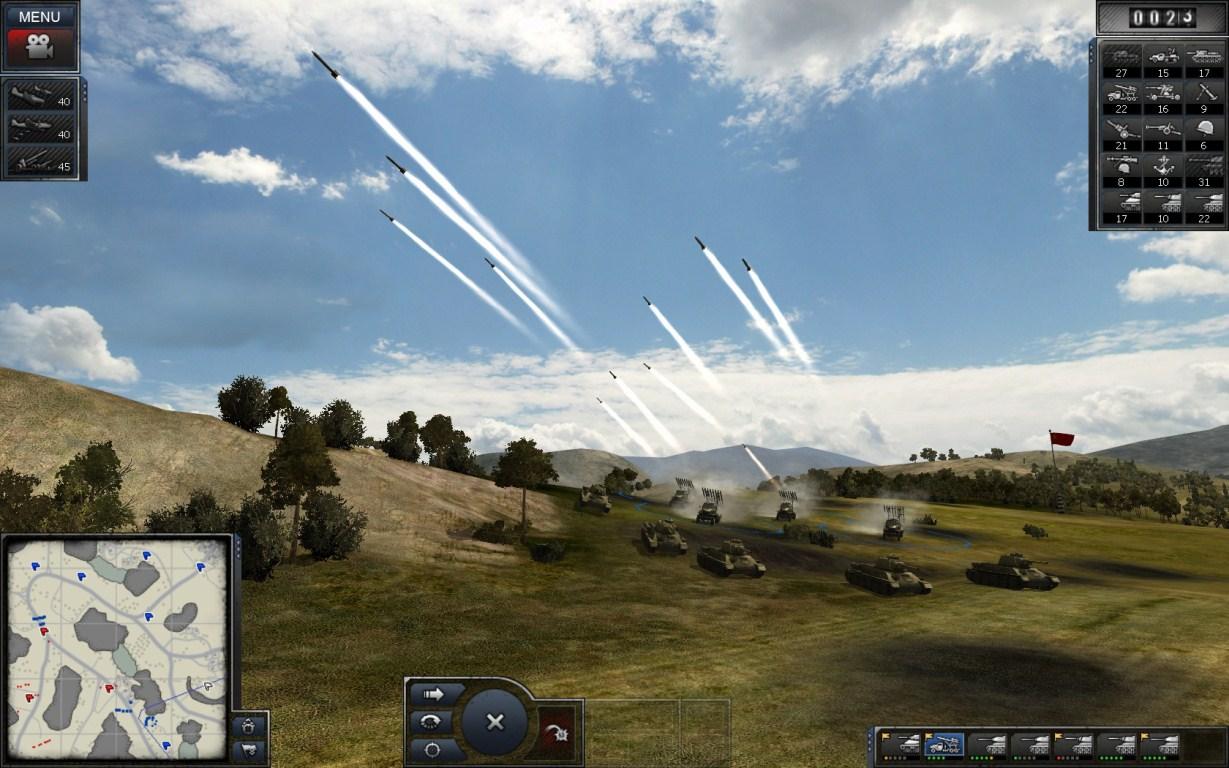
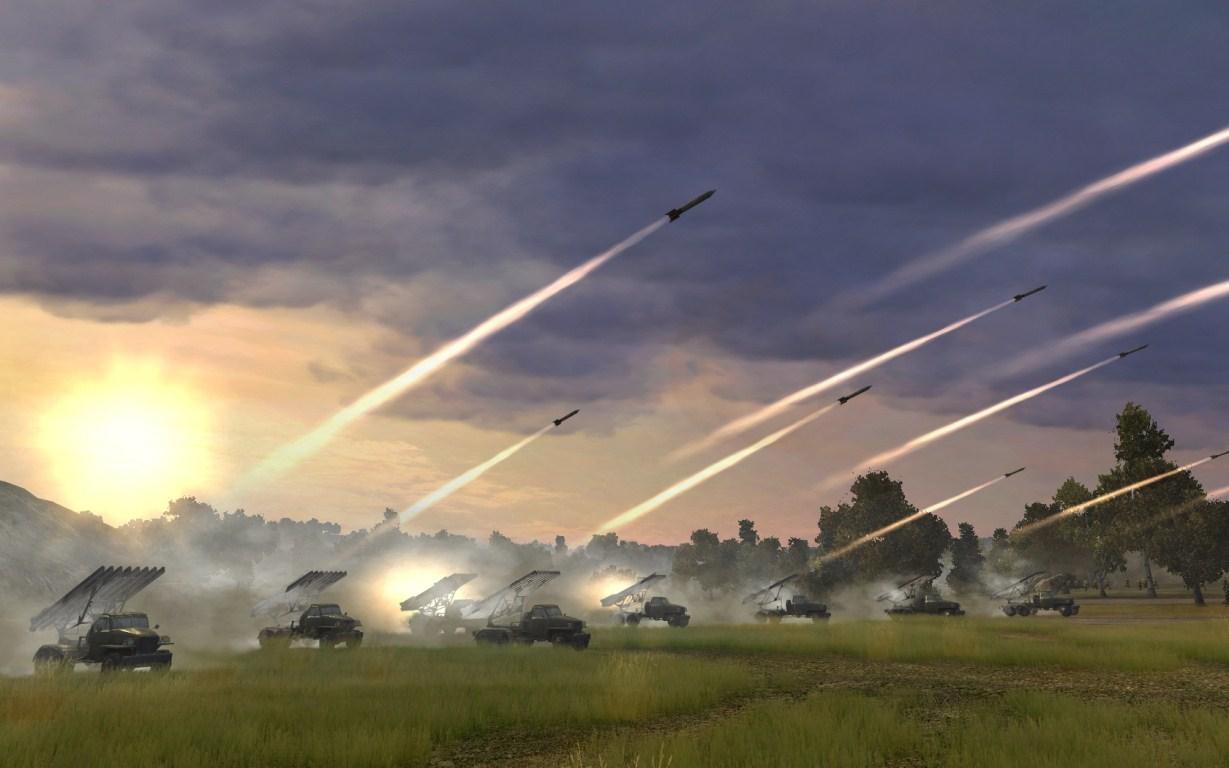
Bringing on the battlefield hordes of tanks and waves of infantry we never forgot about visual component of the game – in Order of War the player is literary “shooting” his own WW2 movie. The level of detail is so high that you can zoom in and see the expression on the face of a separate soldier or detect bullet scraps on the tank’s armor plates.
Order of War gameplay is action-focused. We got rid of resource-gathering, base-building and micromanagement of separate units as we believe that these things would divert player’s attention from his main business - issuing orders and maneuvering on the battlefield. Also, our presentation and advanced camera functionality create a truly unique cinematic gameplay experience that will not only appeal to strategy gamers and PC players, but also fans of history, WW2 and military hardware.
The press releases talk how players can "Take Command of an entire armoured force consisting of up to 1000 soldiers, tank divisions, armoured vehicles, artillery and air force." How are you allowing players to handle that many units at one time?
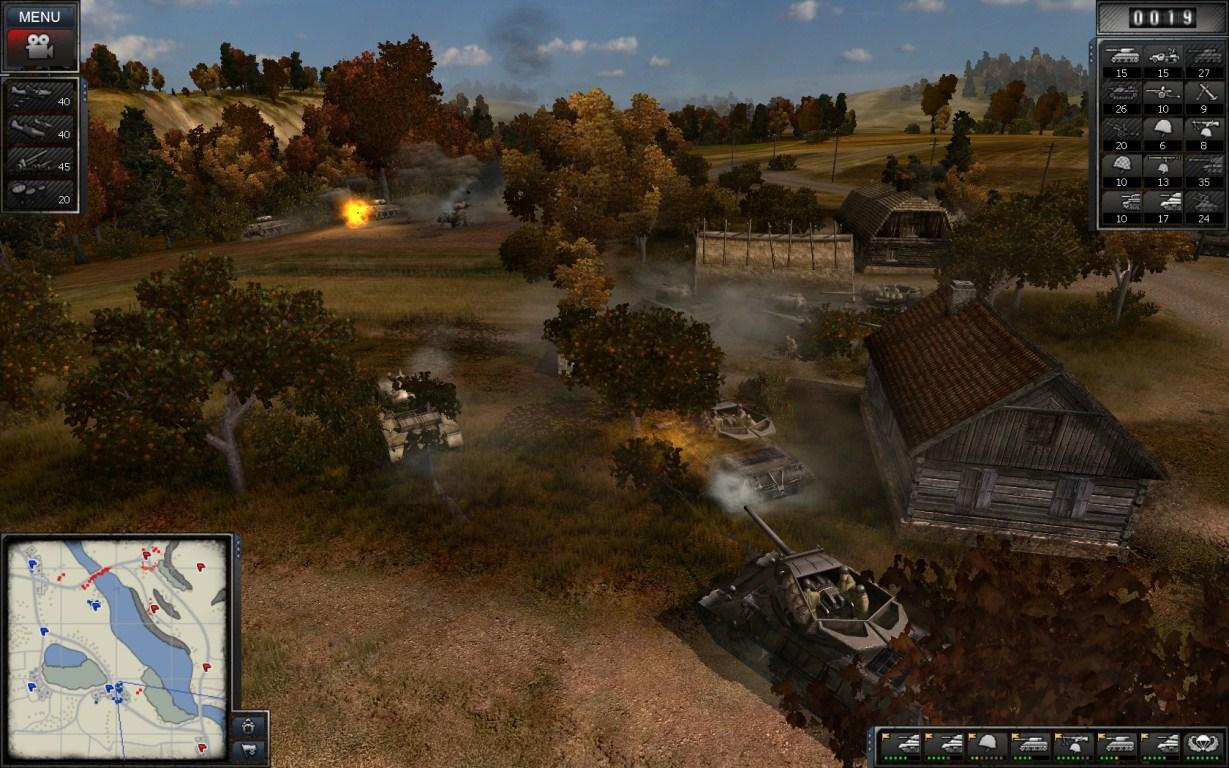
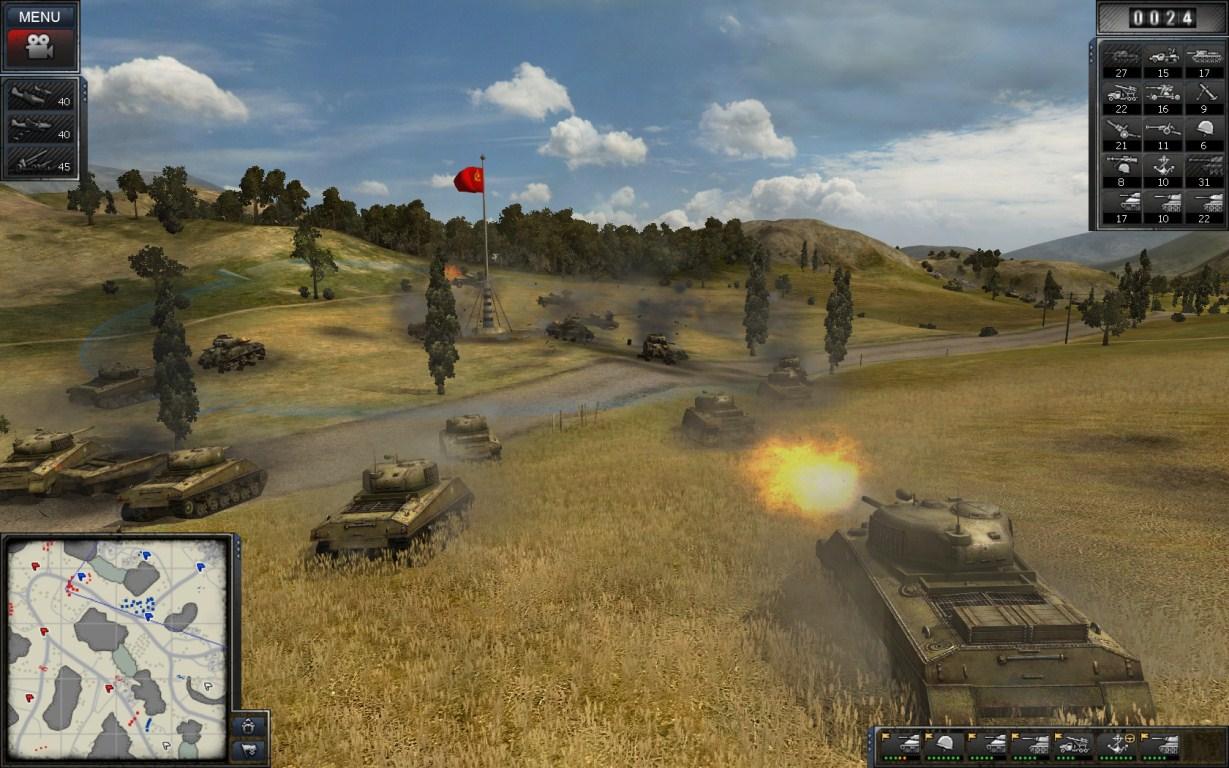
You are right, managing a huge army may seem to be troublesome at first sight. But we took several steps to make Order of War accessible. Firstly, the player can use an “active pause” option to stop the game, analyze situation on the battlefield, give necessary orders and then get back to action. Secondly, in Order of War we used the so called squad-based control system so there’s no need to micromanage every separate unit issuing orders to groups of them instead. Simple and clear UI with a minimap will also make the live of a “virtual commander” easier allowing him to control the battle using only a mouse.
What kind of resource management is in the game?
There’s no resource gathering in Order of War as I’ve already said. The in-game economic system is based on capturing and holding strategic areas that give access to resource points which the player can spend on buying replacements or summoning airstrikes and off-map artillery support. Moreover, with every newly conquered flag the player gets additional types of units available on the reinforcement menu.
Was there every thought of bringing the game to the console or is it just to complex for a controller? What are your thoughts on other companies that have tried to bring strategy games to consoles (like the Lord of the Rings games and Halo Wars)?
Of course, both we and our publisher considered the option of bringing Order of War to the consoleBringing strategy games to consoles is a feasible task, though one should keep in mind that there would be a significant amount of work required to create a new UI and alter some mechanics so that the game would be built from the ground up for that system and audience.
It’s rather difficult for me to comment on other companies’ performance, but I believe that they are doing a great job, because this direction is very promising and the experience they get might be of great use to every developer who decides to follow their steps.
Strategy games have evolved over the years, as one of the top experts in developing strategy games can you talk about where strategy games have been and where you think they are going in the future in terms of gameplay?
Strategy games are evolving in the directions that are suggested by game developers :D. There have been quite a few projects released recently that step over the bounds of classical RTS formula with resource-gathering and base-building, and Order of War is no exception. Today we see this genre evolving quickly and splitting into subgenres. And only time will show which of them will prove to be “durable”.
It’s exciting, however, to see that developers, including ourselves, are taking steps in gameplay that are attracting new audiences to the strategy world, both players from other gaming genres as well as more “casual” players. Games like Order of War and World in Conflict that have removed base building and tech trees in favor of action and tactical decision-making, appeal very much to the FPS gamer who is more used to jumping instantly into combat and working with quick “respawn” times. As the strategy audience broadens, only time will tell where the genre heads and what new innovations will emerge.
Order of War is one step in that process and brings its own twist on strategy that we think will appeal to a lot of people.
Will there be a Pacific campaign expansion? Are there any thoughts about extending the game down the road? Any word on mod support for the game?
It’s too soon to speculate on Order of War expansions and add-ons. Though we, of course, have certain plans regarding further development of the project, but unfortunately they can’t be revealed at the moment. As for the second part of your question, the release version of Order of War won’t allow any mod options, but we’re considering the possibility ofan SDK and map-editor in the add-on.
What kind of multiplayer support will the game have?
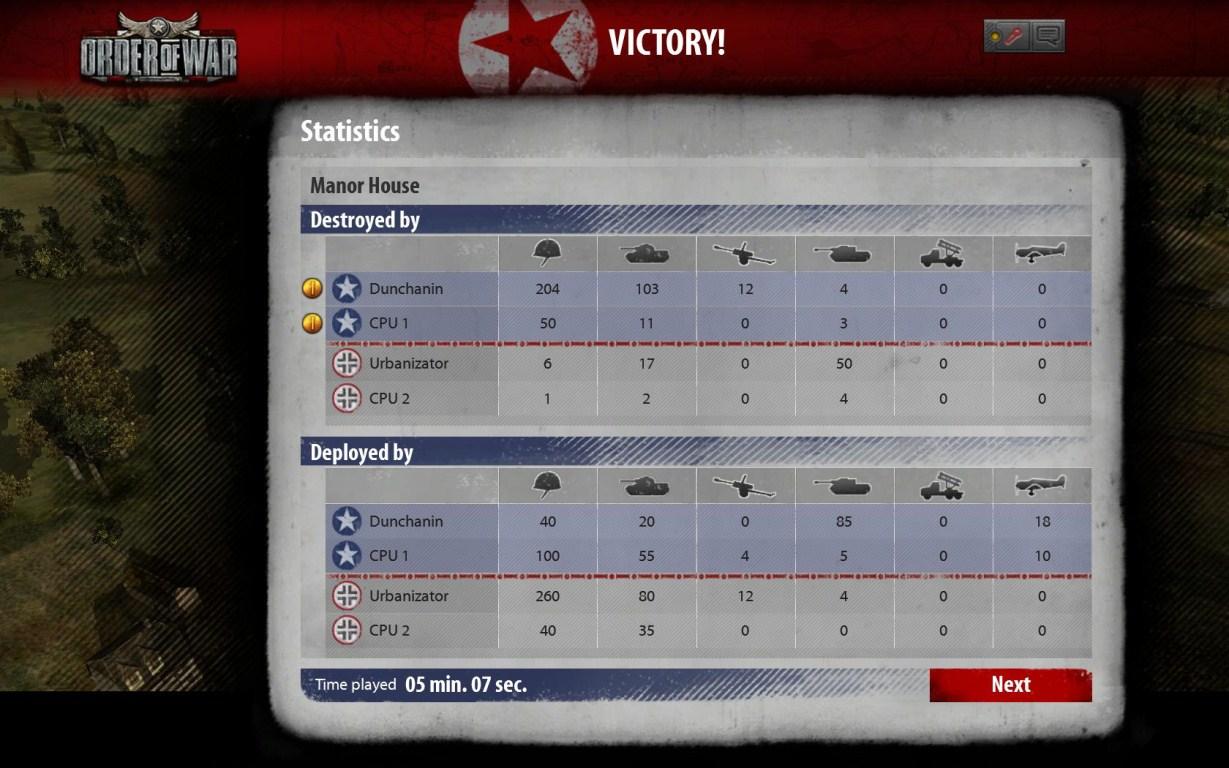
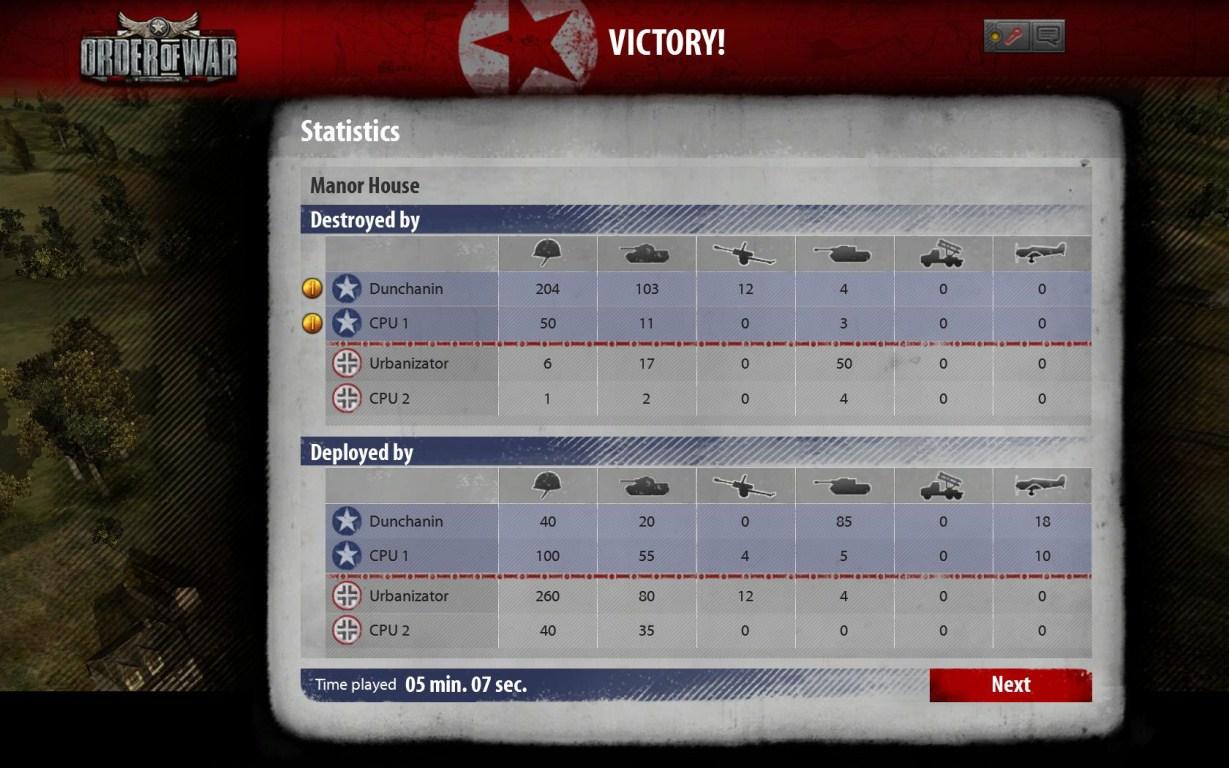
Order of War will feature up to 2vs2 LAN and Internet battles powered by GameSpy technologies with 3 playable factions to choose of: USA, Germany and USSR (not playable in single player). There will be a separate rating system (with ranks and medals) for each party and a general one reflecting the overall progress of the user. Multiplayer clashes will offer deathmatch-style experience with maps being divided into several strategic areas and players’ task being to capture all of them and eliminate the enemy applying whatever tactics and strategies they want. Right now we are working on a bunch of interesting multiplayer features that will be revealed closer to the release date. Be sure to try Order of War MP demo set to release September 15. What kind of feedback have you gotten from the demo? Are you making any changes to the game based on what people are saying about the demo?
We got different feedback from our players based on the demo. Mostly, they were positive in their reactions, though there’s some criticism as well. Some players found it easy, saying that there was not much challenge in the objectives they were to complete. It should be noted though, that the demo mission was designed to be EASY so that everyone (even those new to the genre) could get a feel of the game.
At GamesCom, where the visitors got access to release-version scenarios, we had quite a different situation. Gamers with years of experience in playing other RTS games spent hours in our booth trying to fight off enemy assaults and launch their own counterattacks in order to complete a mission. We made Order of War as accessible as possible by introducing the so-called adaptive AI that adjusts to player’s behavior on the battlefield making the game interesting both to “hardcore” players and newbies. Of course, we take note of all the feedback that we get from our users, analyze it and make changes if it is possible to implement them.
Is there anything we missed that you think is important about the game?
I’d just like to thank GamingNexus staff for interesting questions and your users for the time they spent reading the article. I also want to remind that Order of War release date is set for September 18 (Europe) and September 22 (USA). For all news and updates be sure to visit our official site and forum.
We'd like to thank Victor for taking the time to answer our questions as well as to Brandon and Matt for helping setup the interview.
Can you introduce yourself, talk about your role on the project? How did you get into game development and what's one thing that you love about the industry?
Hi, my name is Victor Kislyi, I’m the CEO of Wargaming.net. As for my role on the project, well, I “poke my nose” into day-to-day work of all company’s departments, focusing mostly on game and level design. I got into game development at the age of 6 or 7 when my elder brother and I started playing and making board games. We used the carpet on the floor of our bedroom as a map and moved hand-made archers, horsemen and infantrymen across it.
One thing that I love about industry? Well, I think it’s the feeling that you never know what your next project is going to be about. You can experiment with ideas until you finally find the ONE that will definitely revolutionize the genre :D .
What is the inspiration behind Order of War?
Order of War is the result of many years of hard work. When Wargaming.net started developing its first game, DBA Online, back in 1998, the company consisted of a dozen people (we were college students then, obsessed with the idea of making a computerized version of a famous board game De Bellis Antiquitatis). With every new project we gained priceless experience and useful knowledge, all the while building up a team of keen enthusiasts. There were hard times but we never stopped, gradually moving forward. And one day we realized that we were ready for a BIG game. That’s when we decided on making Order of War. Today Wargaming.net numbers more than a hundred employees, each putting all his/her energy and effort into the game.
How much of a focus is authenticity in the game? Do you feel you have to give up some realism to keep the game entertaining?
That’s a good question. In Order of War we tried to find a compromise between realism and captivating gameplay. We used tons of archive data (books, photos, engineering drawings, historical magazines etc.) to make sure that the models of military hardware look authentic and historically accurate and have their real combat characteristics. Each faction has strengths and weaknesses based on their real world counterparts. Our battles are set in and designed based on real world battles from the 1944 campaign. The same goes about the game locations and storyline. Actually, we have an entire department responsible for research and documentation study. It’s fair to say that we have a significant amount of realism in the game. For history and war buffs, this is the game for you in that regard.
Moreover, we closely cooperated with historical consultants from the USA who lent assistance to our game designers with particularly tricky issues.
At the same time, this is a game, so there are some things in our game that are by no means realistic. For example, when you call in reinforcements, they appear quickly from certain points at the edge of the map, rather than coming from a rear base far away on trucks and planes. Nobody wants to wait forever to get units – that’s not effective and exciting gameplay! So yes, there are compromises but we think we balanced out the realism with the needs of game design really well. .
Wargaming.net's previous games have all been set in the future, why the decision to change things up and work with a time period in the past? What did you learn from your previous games that you're using in Order of War?
I guess that after years of work with sci-fi we just wanted to switch to something different. When deciding on the setting of a new project (there was no Order of War then :D) we considered several options: WWI, WWII and some kind of futuristic conflict set up on the Earth or other planets. We chose WWII for several reasons. Firstly, the weapon types utilized by WWII armies perfectly fit our game mechanics. Secondly, with WWII theme you get a ready-made storyline, and characters, so there’s no need to create a new world. Thirdly, the memories of this war are still fresh and people are eager to learn new details about the conflict.
As for the second part of your question, in a nutshell, we learned how to make QUALITY strategy games. For example, work on DBA Online and Massive Assault Network 1, 2 taught us many important things about multiplayer and work with community. In Massive Assault: Phantom Renaissance we, for the first time, used cinematic camera, which, after being optimized, moved to Order of War.
We've seen a long line of WWII strategy and FPS games over the last three to four years, what is Order of War doing that's different from what we've seen in the past? How do you fight the WWII fatigue that seems to have settled in the video game industry as of late?
Order of War offers a unique combination of stunning graphics and large-scale warfare that will definitely pick up interest of any strategy fan. You know, there are many real-time strategies where the player wins WWII key battles having only several tanks or SPG’s and a bunch of soldiers to operate with. Our idea was quite different, that’s why while working on Order of War we focused on setting up really huge clashes bringing the player in command of a whole army like it is done in Total War series. Some operations fit up to 1000 units onscreen representing each side of the conflict.
Bringing on the battlefield hordes of tanks and waves of infantry we never forgot about visual component of the game – in Order of War the player is literary “shooting” his own WW2 movie. The level of detail is so high that you can zoom in and see the expression on the face of a separate soldier or detect bullet scraps on the tank’s armor plates.
Order of War gameplay is action-focused. We got rid of resource-gathering, base-building and micromanagement of separate units as we believe that these things would divert player’s attention from his main business - issuing orders and maneuvering on the battlefield. Also, our presentation and advanced camera functionality create a truly unique cinematic gameplay experience that will not only appeal to strategy gamers and PC players, but also fans of history, WW2 and military hardware.
The press releases talk how players can "Take Command of an entire armoured force consisting of up to 1000 soldiers, tank divisions, armoured vehicles, artillery and air force." How are you allowing players to handle that many units at one time?
You are right, managing a huge army may seem to be troublesome at first sight. But we took several steps to make Order of War accessible. Firstly, the player can use an “active pause” option to stop the game, analyze situation on the battlefield, give necessary orders and then get back to action. Secondly, in Order of War we used the so called squad-based control system so there’s no need to micromanage every separate unit issuing orders to groups of them instead. Simple and clear UI with a minimap will also make the live of a “virtual commander” easier allowing him to control the battle using only a mouse.
What kind of resource management is in the game?
There’s no resource gathering in Order of War as I’ve already said. The in-game economic system is based on capturing and holding strategic areas that give access to resource points which the player can spend on buying replacements or summoning airstrikes and off-map artillery support. Moreover, with every newly conquered flag the player gets additional types of units available on the reinforcement menu.
Was there every thought of bringing the game to the console or is it just to complex for a controller? What are your thoughts on other companies that have tried to bring strategy games to consoles (like the Lord of the Rings games and Halo Wars)?
Of course, both we and our publisher considered the option of bringing Order of War to the consoleBringing strategy games to consoles is a feasible task, though one should keep in mind that there would be a significant amount of work required to create a new UI and alter some mechanics so that the game would be built from the ground up for that system and audience.
It’s rather difficult for me to comment on other companies’ performance, but I believe that they are doing a great job, because this direction is very promising and the experience they get might be of great use to every developer who decides to follow their steps.
Strategy games have evolved over the years, as one of the top experts in developing strategy games can you talk about where strategy games have been and where you think they are going in the future in terms of gameplay?
Strategy games are evolving in the directions that are suggested by game developers :D. There have been quite a few projects released recently that step over the bounds of classical RTS formula with resource-gathering and base-building, and Order of War is no exception. Today we see this genre evolving quickly and splitting into subgenres. And only time will show which of them will prove to be “durable”.
It’s exciting, however, to see that developers, including ourselves, are taking steps in gameplay that are attracting new audiences to the strategy world, both players from other gaming genres as well as more “casual” players. Games like Order of War and World in Conflict that have removed base building and tech trees in favor of action and tactical decision-making, appeal very much to the FPS gamer who is more used to jumping instantly into combat and working with quick “respawn” times. As the strategy audience broadens, only time will tell where the genre heads and what new innovations will emerge.
Order of War is one step in that process and brings its own twist on strategy that we think will appeal to a lot of people.
Will there be a Pacific campaign expansion? Are there any thoughts about extending the game down the road? Any word on mod support for the game?
It’s too soon to speculate on Order of War expansions and add-ons. Though we, of course, have certain plans regarding further development of the project, but unfortunately they can’t be revealed at the moment. As for the second part of your question, the release version of Order of War won’t allow any mod options, but we’re considering the possibility ofan SDK and map-editor in the add-on.
What kind of multiplayer support will the game have?
Order of War will feature up to 2vs2 LAN and Internet battles powered by GameSpy technologies with 3 playable factions to choose of: USA, Germany and USSR (not playable in single player). There will be a separate rating system (with ranks and medals) for each party and a general one reflecting the overall progress of the user. Multiplayer clashes will offer deathmatch-style experience with maps being divided into several strategic areas and players’ task being to capture all of them and eliminate the enemy applying whatever tactics and strategies they want. Right now we are working on a bunch of interesting multiplayer features that will be revealed closer to the release date. Be sure to try Order of War MP demo set to release September 15. What kind of feedback have you gotten from the demo? Are you making any changes to the game based on what people are saying about the demo?
We got different feedback from our players based on the demo. Mostly, they were positive in their reactions, though there’s some criticism as well. Some players found it easy, saying that there was not much challenge in the objectives they were to complete. It should be noted though, that the demo mission was designed to be EASY so that everyone (even those new to the genre) could get a feel of the game.
At GamesCom, where the visitors got access to release-version scenarios, we had quite a different situation. Gamers with years of experience in playing other RTS games spent hours in our booth trying to fight off enemy assaults and launch their own counterattacks in order to complete a mission. We made Order of War as accessible as possible by introducing the so-called adaptive AI that adjusts to player’s behavior on the battlefield making the game interesting both to “hardcore” players and newbies. Of course, we take note of all the feedback that we get from our users, analyze it and make changes if it is possible to implement them.
Is there anything we missed that you think is important about the game?
I’d just like to thank GamingNexus staff for interesting questions and your users for the time they spent reading the article. I also want to remind that Order of War release date is set for September 18 (Europe) and September 22 (USA). For all news and updates be sure to visit our official site and forum.
We'd like to thank Victor for taking the time to answer our questions as well as to Brandon and Matt for helping setup the interview.
* The product in this article was sent to us by the developer/company.


About Author
Hi, my name is Charles Husemann and I've been gaming for longer than I care to admit. For me it's always been about competing and a burning off stress. It started off simply enough with Choplifter and Lode Runner on the Apple //e, then it was the curse of Tank and Yars Revenge on the 2600. The addiction subsided somewhat until I went to college where dramatic decreases in my GPA could be traced to the release of X:Com and Doom. I was a Microsoft Xbox MVP from 2009 to 2014. I currently own stock in Microsoft, AMD, and nVidia.
