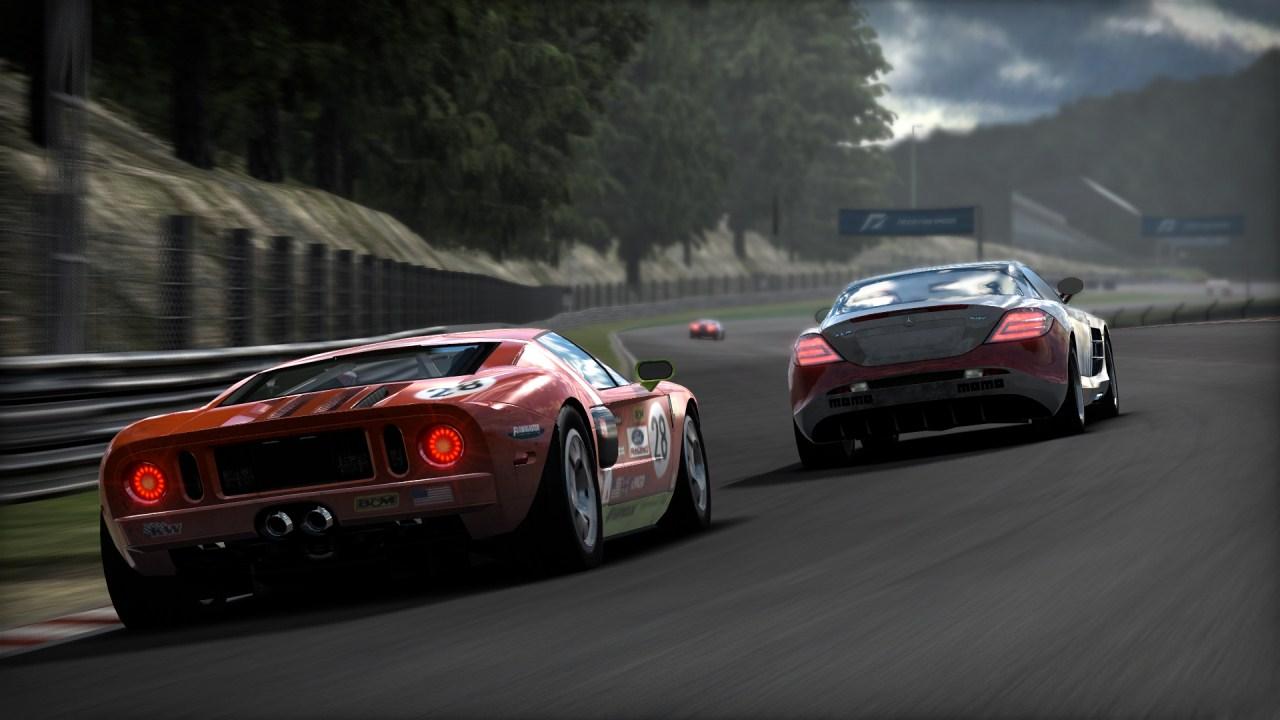
Need for Speed SHIFT
What do I mean by “arcade style?” Consider the Need for Speed series, if you will. The NFS games have been around for more than a decade and have a long history of innovation and evolution that they can be justifiably proud of, but no matter how detailed the graphics got or how many cars were available for the virtual driver, they always maintained at least some degree of fantasy elements. In early versions, it was traffic cops that would pull you over with extreme prejudice. In other words, they'd knock you off the road if they could. Races were, for the most part, point-to-point on open roads rather than formal racing events on sanctioned race tracks. This style of play was even carried into what until recently was arguably the most realistic of the NFS games, Need for Speed: Porsche Unleashed.
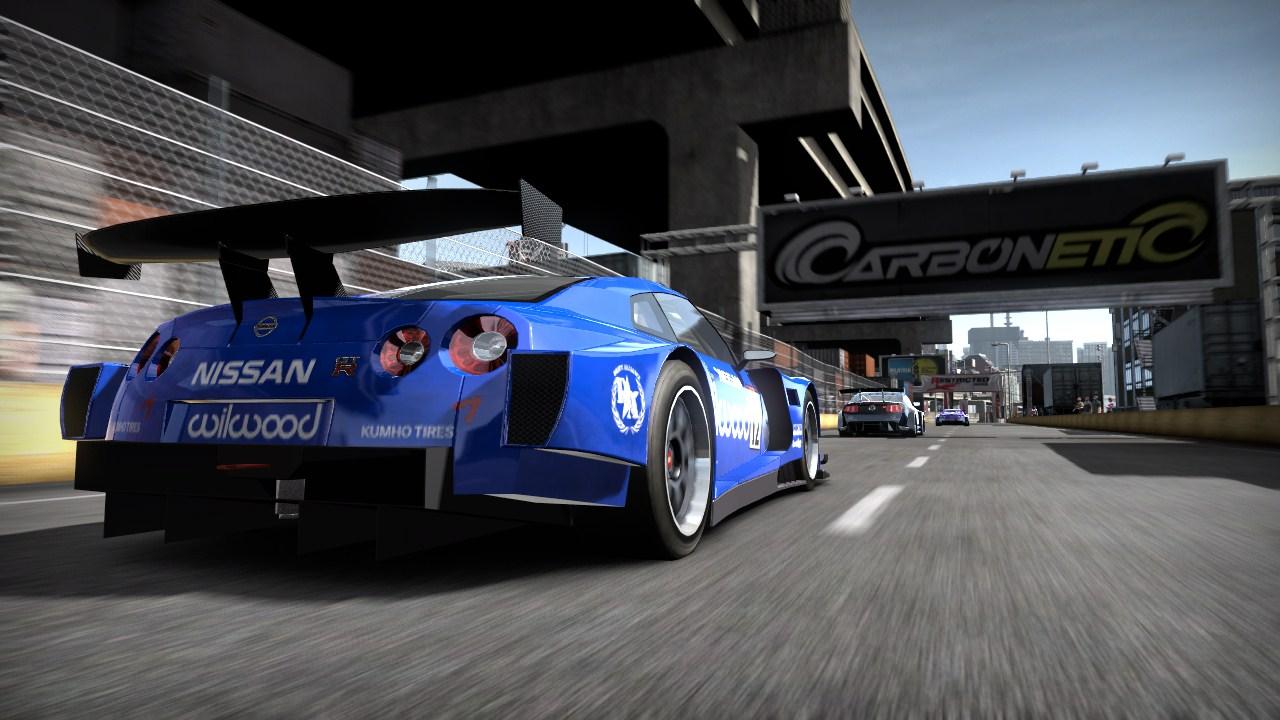
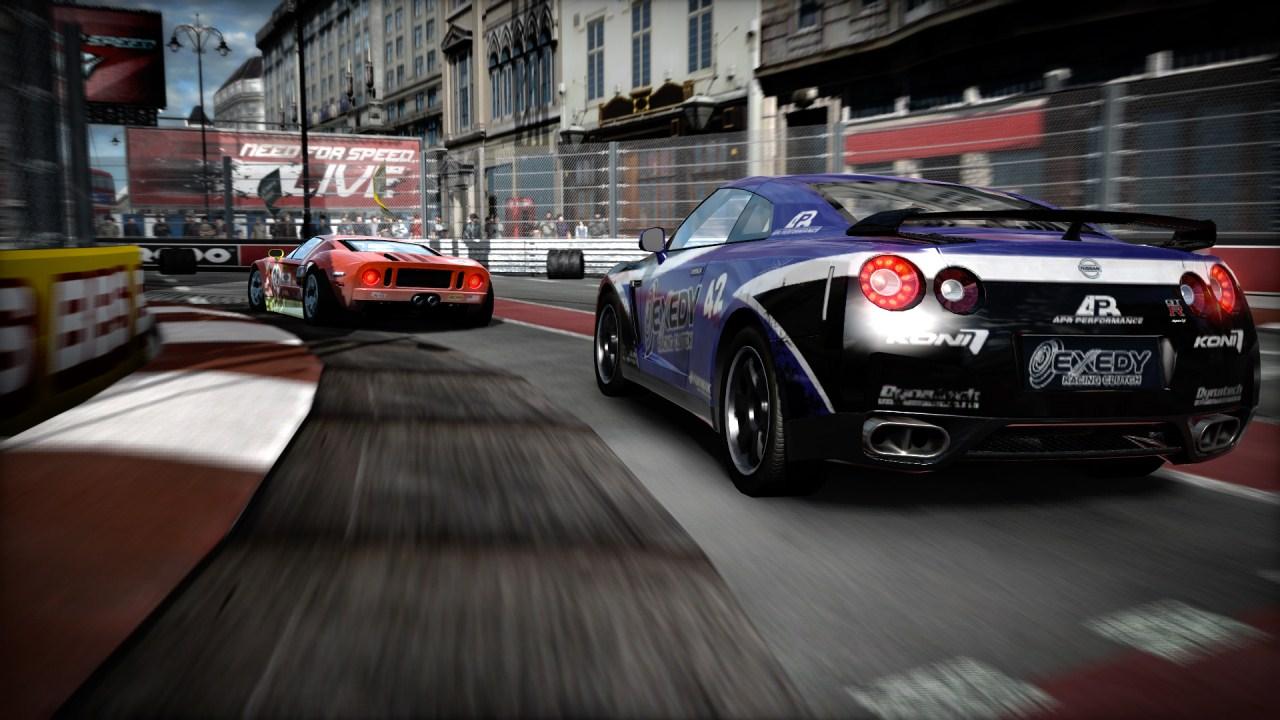
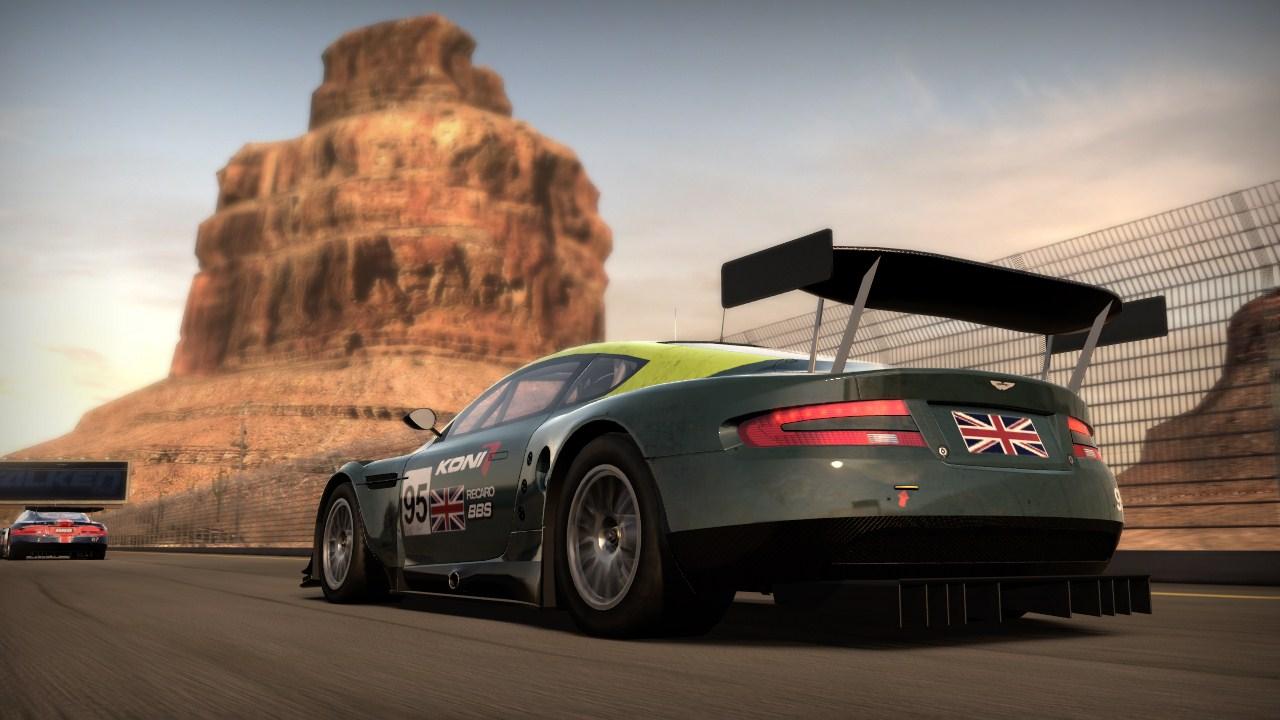
The most recent development in the Need for Speed series, Need for Speed: SHIFT, makes a radical departure from the norm. With the development of SHIFT, the contribution of designers and developers that earned their chops developing hyper-realistic and extremely popular PC titles like GT Legends and GTR 2 becomes readily apparent. SHIFT concentrates on providing the player with a realistic style of game play, offering the opportunity to pursue a career in officially sanctioned races on both real-world and fictional tracks. While there may be a few fictional race circuits, the cars themselves are all highly detailed models of cars that are available in showrooms across the world.
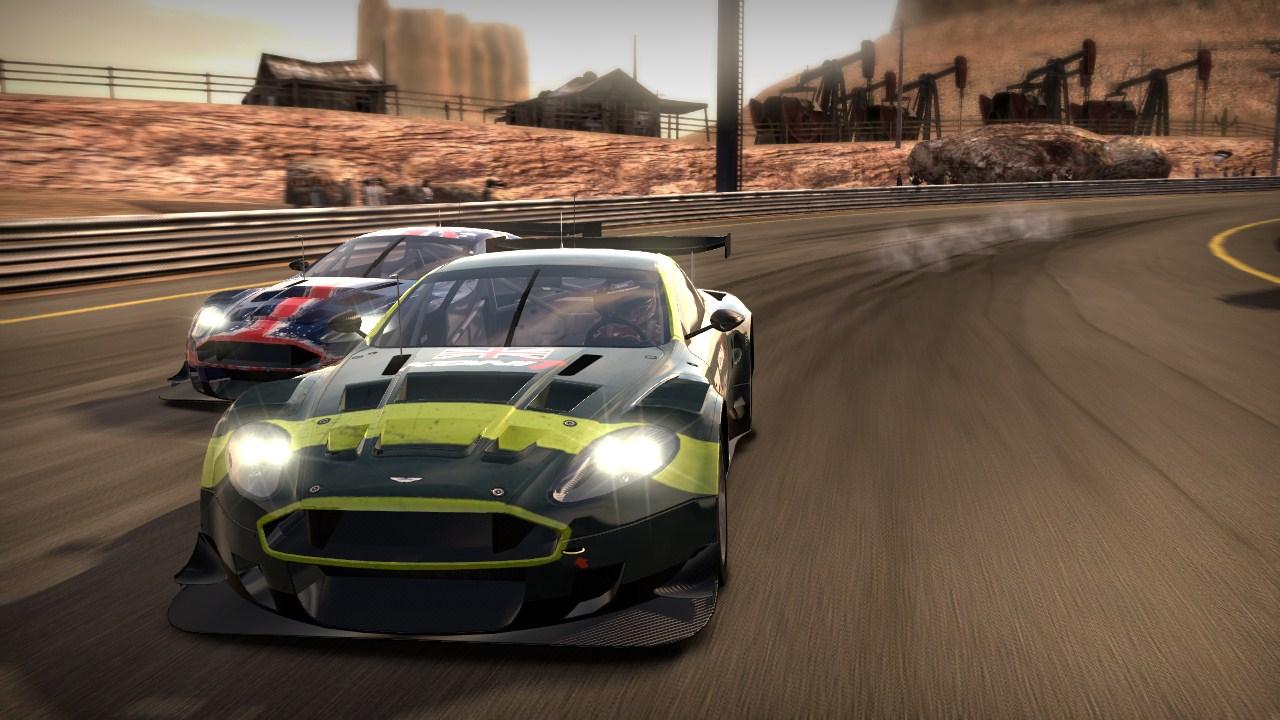
Beyond the eye candy of gorgeously rendered cars and tracks, the developers have attempted to create a more immersive and believable driving experience by also raising the bar in the areas of car/driving physics as well as the 3D physics that apply to the driver as sometimes violent forces are applied to their body. As an example, consider what happens to the driver when a car slams against either another car, an immovable object, or both. The G forces in these types of racing incidents can be quite extreme, and at a minimum can cause the driver's head to move around quite a bit. SHIFT models this head movement by shifting the players view from inside the car, but that's just the beginning. SHIFT also models the driver's reaction to extreme hits by blurring the player's vision and, if the hit is hard enough, even graying out the driver's vision to a faded black and white. You know it's a pretty hard hit when the cones of your retinas fall off!
In these aspects, it's fair to say that SHIFT for the Xbox 360 has met, and in some aspects exceeded, the standard set by PC racing games. That having been said, there are still some remaining issues that for better or worse demonstrate the console roots of Need for Speed. The first issue is, of course, the controller. While steering wheel controllers are now available for the Xbox, the large majority of players will be using the standard controllers. Note that this situation is by no means unique to consoles; anyone wanting to play a good racing game on the PC also will find a good wheel controller to be a fundamental necessity. In the interest of fairness to those that will be playing SHIFT with the standard controller, the perceptions shared in this review are completely based on experience playing with a controller, not a steering wheel.
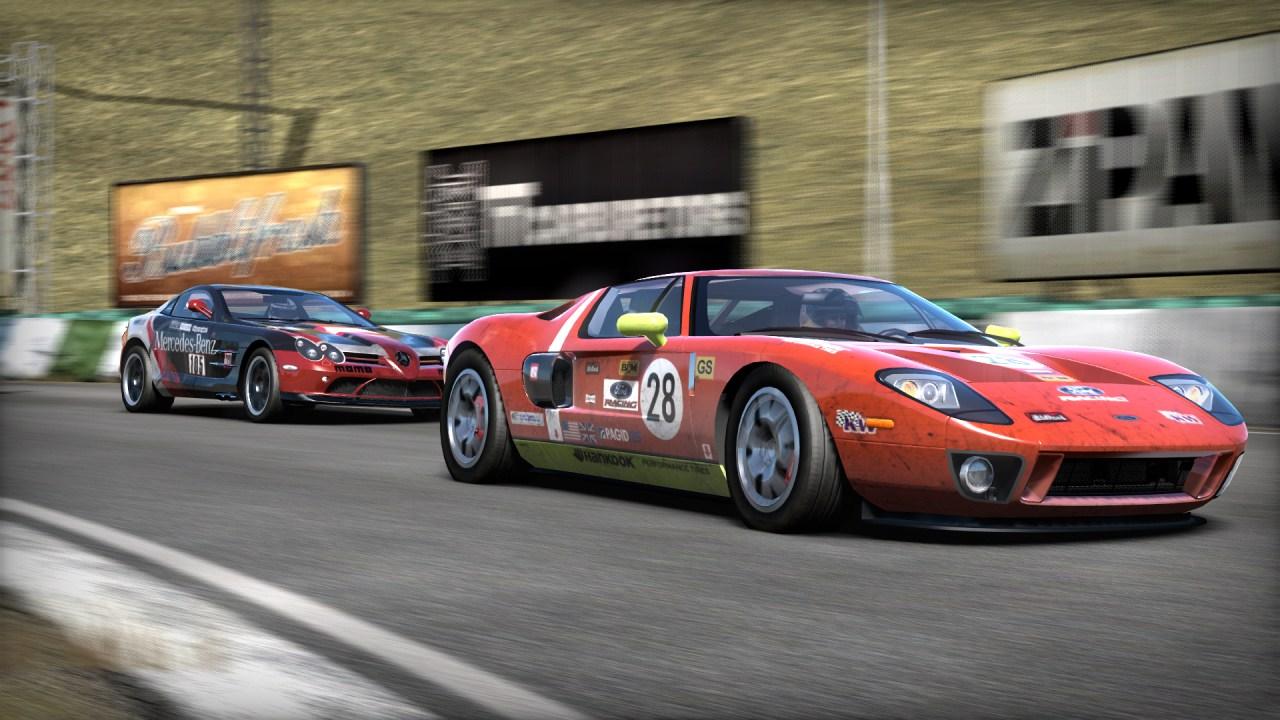
The issue with controllers is mostly the short throw of the analog sticks. Because the range of motion is so tight, it is difficult to precisely control the steering. With enough practice a player can get good enough to race pretty well, but newer players will find that they tend to skid a lot, and when trying to catch a skid with opposite stick, get into a driver induced oscillation pattern. In other words, over controlling often leads to zig zagging down the track. SHIFT tries to alleviate that type of situation by providing the player with a highly tunable set of controller settings. The player can adjust the percentage of dead zone in the steering, for example, as well as the percent of control desensitization applied as the car is moving faster. The latter setting is what helps keep the player from driving off of the track on long straightaways. I found that the default settings worked pretty well for me, but that I tended to make turns by applying gentle nudges through a turn rather than try to hold a constant stick deflection. This often caused the car to skid through the turns, much like the cars in drift racing do.
SHIFT also exhibits its console game heritage by making the player unlock (or more charitably, earn) cars before being allowed to drive them. This more than anything else is what defines SHIFT as a game, rather than as a simulator. It's a bit of a bother, really. Slogging through race after race in cars you could go buy at a local dealership before being granted permission to race the more powerful and exotic models is somewhat of an irritation. You bought the game, after all. EA has your money; why won't they let you use the cool cars??Another aspect of the console game style carried into SHIFT is what I call short attention span racing. As you start your career, you have to place well in various races to earn the points needed to advance to the next level and the dollars needed to unlock new cars. There is no qualifying in these races; it seems that you always start near the back of the field. That, combined with the fact that the races are often only a few laps long, means that you have to work your way through the pack quickly. That in turn means that you probably aren't going to work your way to the front cleanly.
To be blunt, the short races with high stakes essentially forces the player to drive like Kyle Busch. Interestingly, this fact is recognized in SHIFT with Driver Profiles. These profiles track your style as a driver as either aggressive or precise. As an aggressive driver, you earn points for blocking, spinning, or knocking other cars off the track. As a precise driver, you earn points for clean passes, staying on the racing line, and mastering turns on the tracks. You can, of course, score points in both driving styles concurrently. The profile that fits your driving style best will be used to determine the nature of invitational races you will be offered the opportunity to race in. Precision drivers will be invited to time challenge style races, while aggressive drivers will find themselves being invited to survival-of-the-meanest types of races.
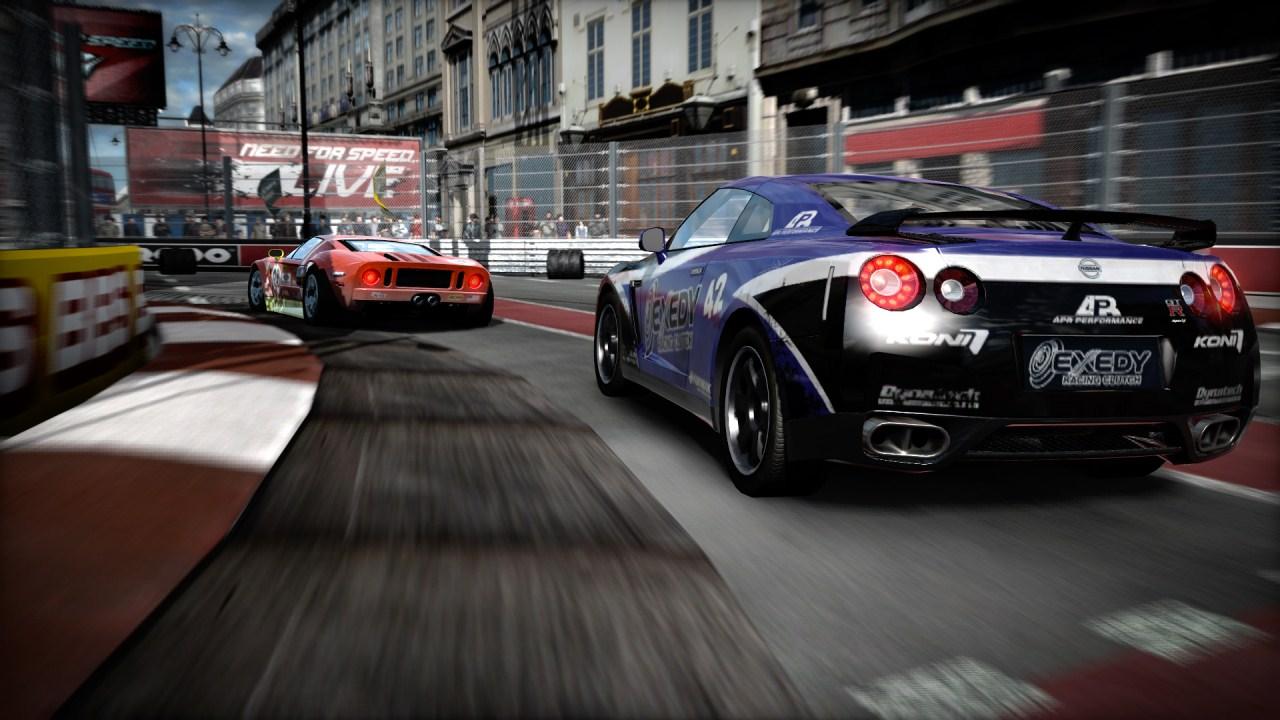
You can more or less skip the short attention span racing mode simply by selecting Quick Race instead of Career at the start menu. This will allow you to tailor a race to your own desires, whether it be one-on-one with a single opponent or a 15 car field. You are still limited to driving only the cars that you have unlocked in the Career mode, but the races still have purse money available to build your funds. You can elect to drive anywhere from one lap to twenty, and you can select the track of your choice. Tracks include world famous European and domestic venues such as Spa Francorchamps in Belgium, Silverstone and Brands Hatch in England, and Laguna Seca and Elkhart Lake in the US. There are also much smaller tracks available in case you want to unleash your inner Kyle Busch. A twenty lap race with fifteen opponents at the figure eight, one-third mile Hazyview track is perfect for that.
The tracks themselves are realistically modeled, although it was surprising to see that the track at Spa still had the old style bus stop chicane rather than the modified chicane in use now. For the most part, though, the tracks will look just like the in-car view you've seen on TV. Well, albeit with some embellishments here and there; I don't remember ever seeing a carnival ride just past the Stavelot turn. But even with that, all of the turns are where you expect them to be and you will be able to drive some of the more famous tracks quite well after just a lap or two.
Even tracks that are unfamiliar to you will be reasonably easy for you to race on because of the dynamic multi-color racing line overlaid on the track. Not surprisingly, when the line is green you are at a safe speed, yellow means it might be time to consider slowing down a bit, and red means get on the brakes right NOW! The racing line can be disabled once you're familiar enough with the layout of the track that you no longer need it. The combination of the racing line and the user configurable difficulty settings goes a long way towards making SHIFT accessible even to casual players, an important trait in the console world.
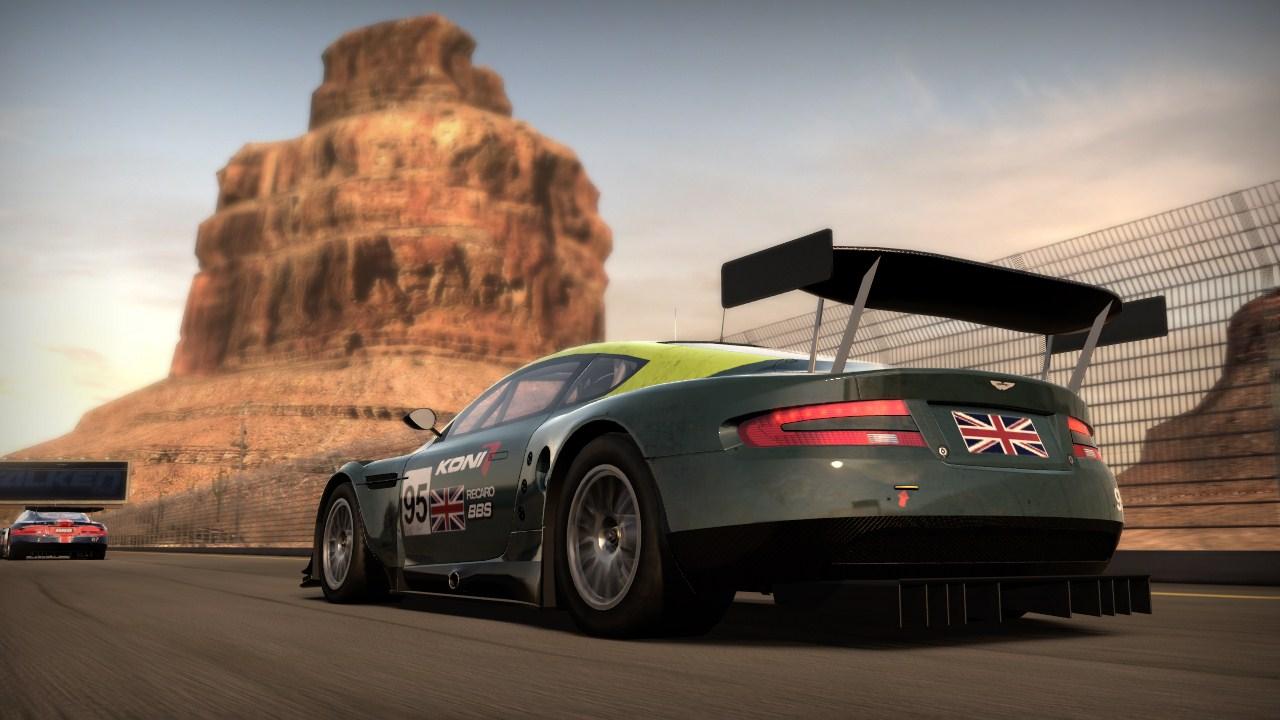
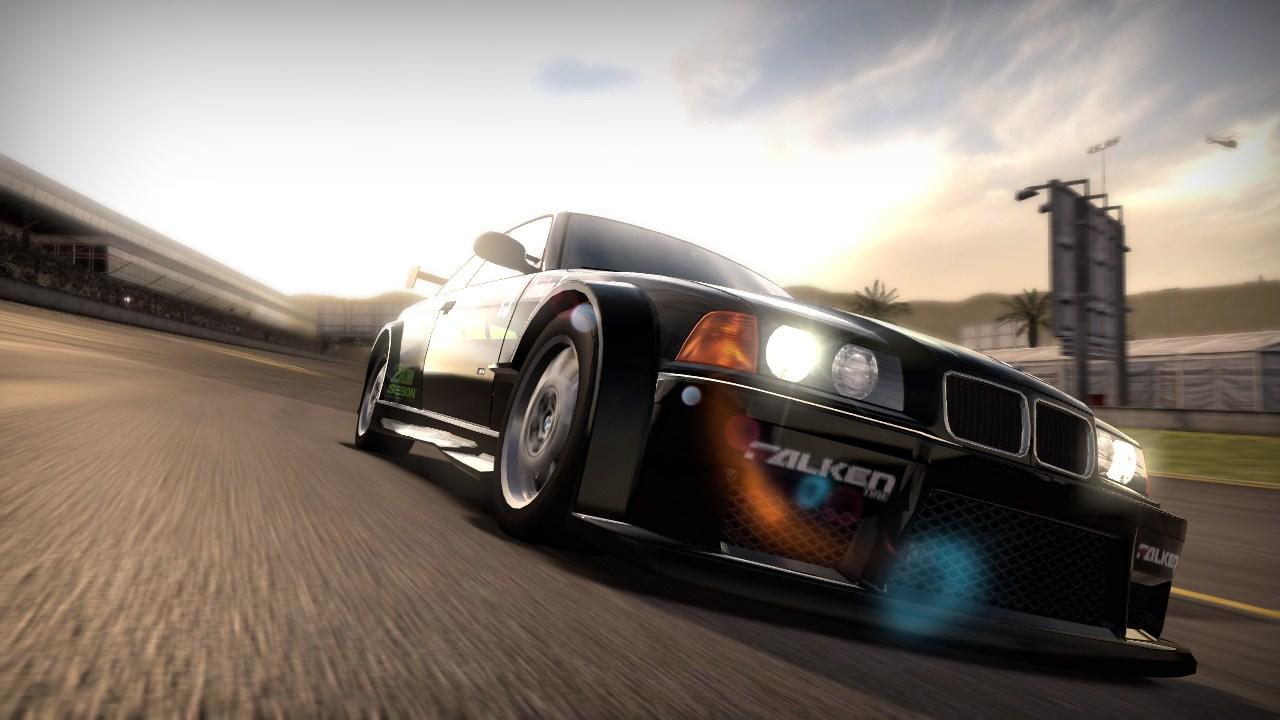
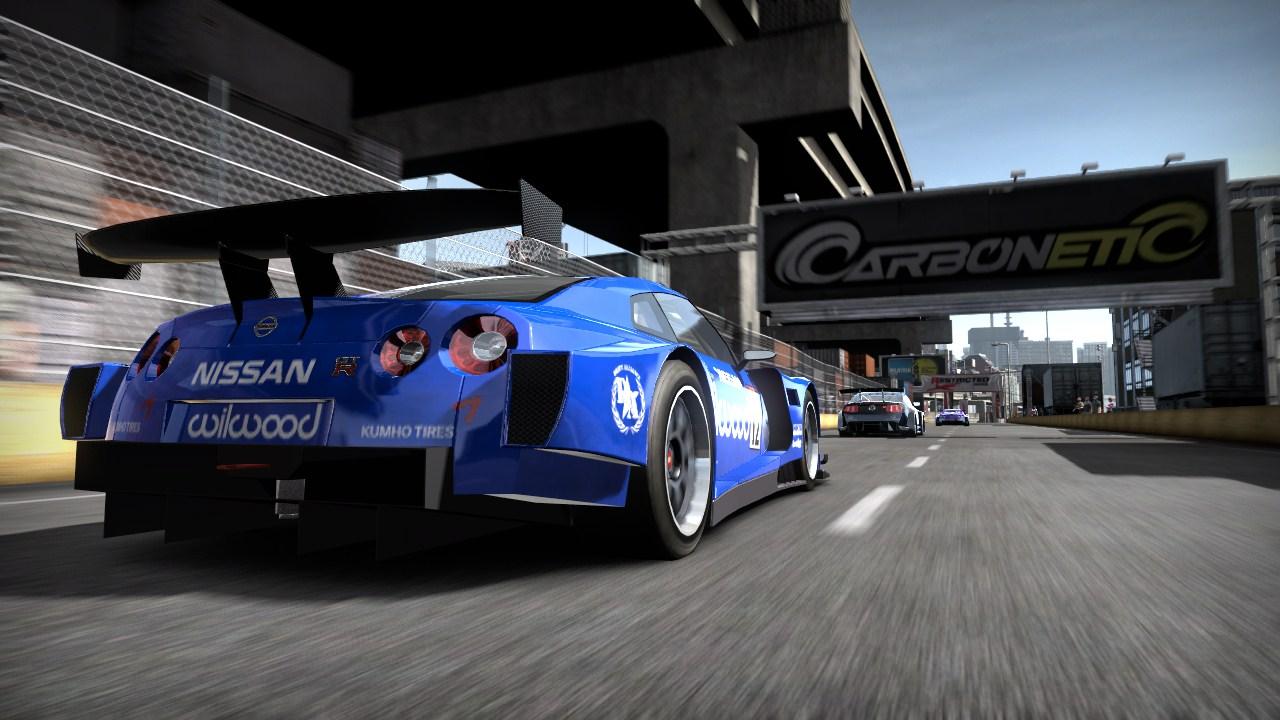
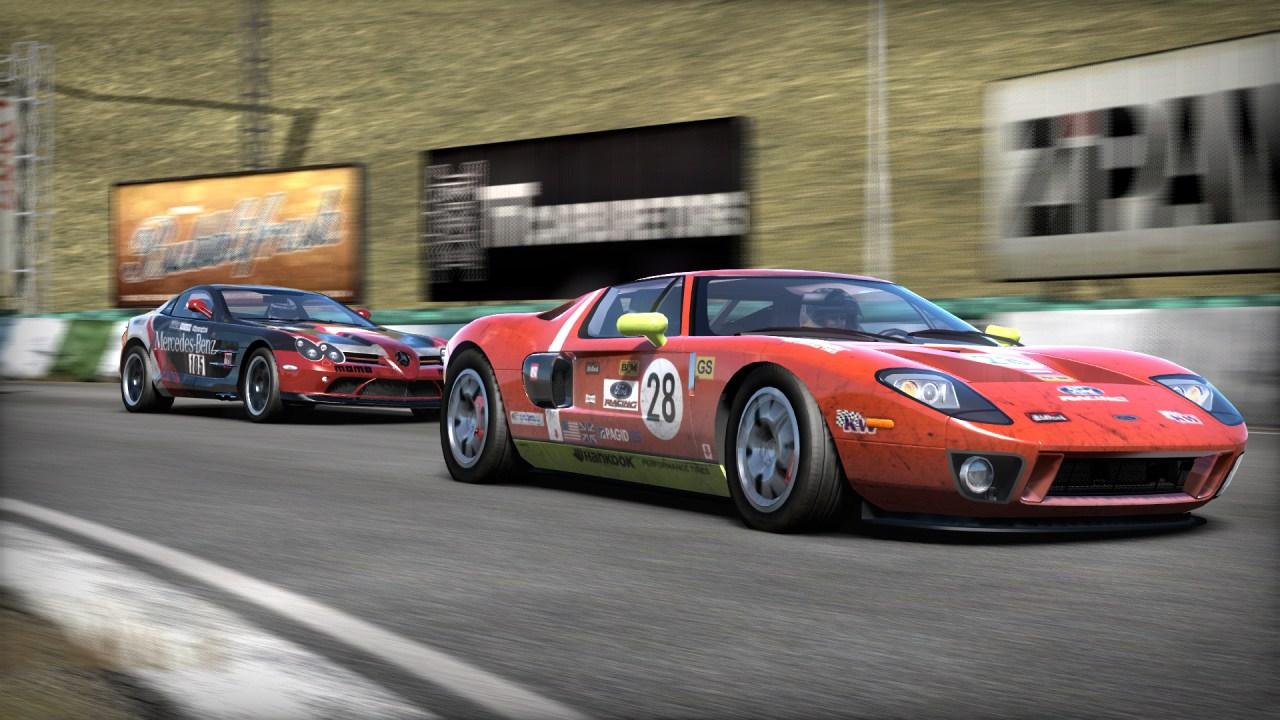
The ability for both casual and hard-core racers to find something to love in SHIFT is a very good thing simply because it will allow just about everyone to experience the amazing virtual driving experience. The in-car views are fantastic, and visual tricks like blurring the dashboard as the car reaches dangerously high speeds impart a true sense of edge-of-the-seat, white knuckled driving. The compelling visuals carry over into the actual racing as well. Even subtle details like giving the car ahead of you a little bump in a turn to move him to the outer edge of the track to enable a pass and driving through the cloud of dust raised as his wheels drop off the edge of the tarmac adds tremendous depth to the experience. Flying across a bump in the track and feeling the car get light underneath you, sometimes to the degree that you find yourself clenching your seat, gets the racing adrenalin pumping every time.
And it's not just the visuals, either. The sounds are equally well done. The roar of the engine and the whine of the transmission is so compelling that I got myself into a little domestic trouble by cranking them up too high on a lazy Sunday morning when the rest of the family was still sleeping in. I also appreciated that I didn't have to endure a lot of loud background music while driving; my first stop in just about every new game I play is to find the audio menu and turn off the music. I want to hear the engine, I need to hear the tires squealing, and the whine of the transmission is every bit as effective as a speedometer in helping me gauge my speed.
With Need for Speed SHIFT, EA has made a profound, well... shift in the direction of the series. Although they will continue to develop and release Arcade style titles under the Need for Speed banner, SHIFT signals a new branch into far deeper and more realistic driving simulations. SHIFT is a fantastic entry in the Need for Speed line up and hopefully only a precursor to ever more sophisticated simulations.
Rating: 9.5 Excellent
* The product in this article was sent to us by the developer/company.





About Author
I've been fascinated with video games and computers for as long as I can remember. It was always a treat to get dragged to the mall with my parents because I'd get to play for a few minutes on the Atari 2600. I partially blame Asteroids, the crack cocaine of arcade games, for my low GPA in college which eventually led me to temporarily ditch academics and join the USAF to "see the world." The rest of the blame goes to my passion for all things aviation, and the opportunity to work on work on the truly awesome SR-71 Blackbird sealed the deal.
My first computer was a TRS-80 Model 1 that I bought in 1977 when they first came out. At that time you had to order them through a Radio Shack store - Tandy didn't think they'd sell enough to justify stocking them in the retail stores. My favorite game then was the SubLogic Flight Simulator, which was the great Grandaddy of the Microsoft flight sims.
While I was in the military, I bought a Commodore 64. From there I moved on up through the PC line, always buying just enough machine to support the latest version of the flight sims. I never really paid much attention to consoles until the Dreamcast came out. I now have an Xbox for my console games, and a 1ghz Celeron with a GeForce4 for graphics. Being married and having a very expensive toy (my airplane) means I don't get to spend a lot of money on the lastest/greatest PC and console hardware.
My interests these days are primarily auto racing and flying sims on the PC. I'm too old and slow to do well at the FPS twitchers or fighting games, but I do enjoy online Rainbow 6 or the like now and then, although I had to give up Americas Army due to my complete inability to discern friend from foe. I have the Xbox mostly to play games with my daughter and for the sports games.
View Profile
