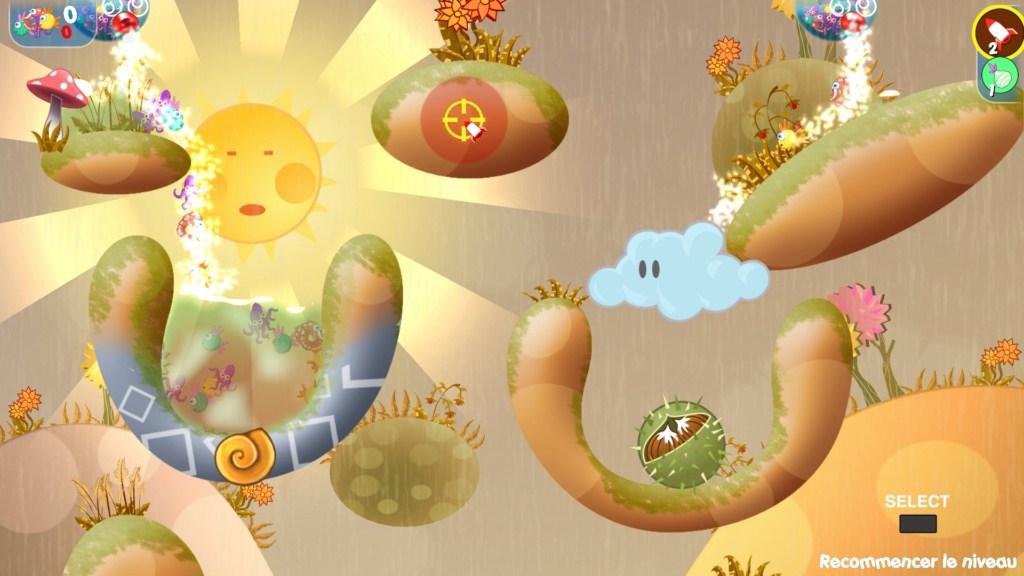
Aqua Panic
The premise of Aqua Panic is pretty simple. A giant hurricane has sucked up thousands of fish from the oceans and scattered them all over the Earth. In order to respond to this devastating natural disaster (as the game describes) scientists have created “water tanks” which have been placed all over the planet to house the fish until they can be safely returned to the rightful home(s). Players are tasked with getting a certain percentage (different per level) 100 fish back to their home in the seas safely. In order to do this, you will need to utilize a variety of tools and environmental objects in order to ensure a safe path down the open and safe seas. Along the way, you will encounter a variety of dangers including predator fish spread across your possible paths as well as outlets that leak your fish into the unsafe area(s) of the sea with larger, more ferocious fish waiting to eat your little guys whole. It is a simple and tried-and-true premise that has worked well in the puzzle game genre in numerous games dating back to the classic Lemmings series.
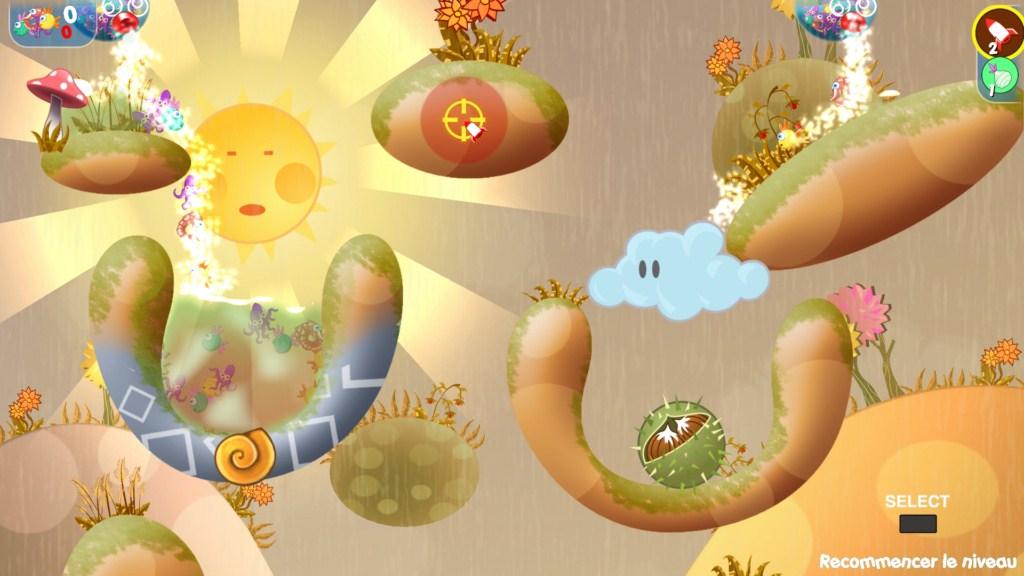
Saving all of the world’s little fishies is done across three modes in Aqua Panic. The main mode, or story mode if you will, will guide players through roughly 80 stages which vary in both the complexity of their design and their environment. As you progress through the stages, the game introduces you to each of the various tools and the techniques required to pass each stage; you will also get a chance to pick up coins spread throughout the world which add to your bank account for spending in other modes of the game. Early levels show you how to effectively use the bombs and harpoons to clear paths and eliminate predatory fish that lurk in the stages’ pockets where your fish will undoubtedly end up during their trip. Not too long after that, you will have a full arsenal at your disposal, though in limited quantities to complete each stage / challenge. The game will give you many tools to use both directly and indirectly including seeds to plant, clouds that hold your fish, and even the ability to freeze water for periods of time. When it comes to the coinage that is spread throughout the level, there are usually three types of coins: bronze, silver, and gold. Each classification of coin represents a different and increasing amount as well as placement on the map that varies in difficulty. Obviously, the more expensive golden coins are a lot harder to collect then the bronze which you will usually run across without putting in any extra effort. Money that is collected throughout your adventure can be spent in the game’s freeplay mode.
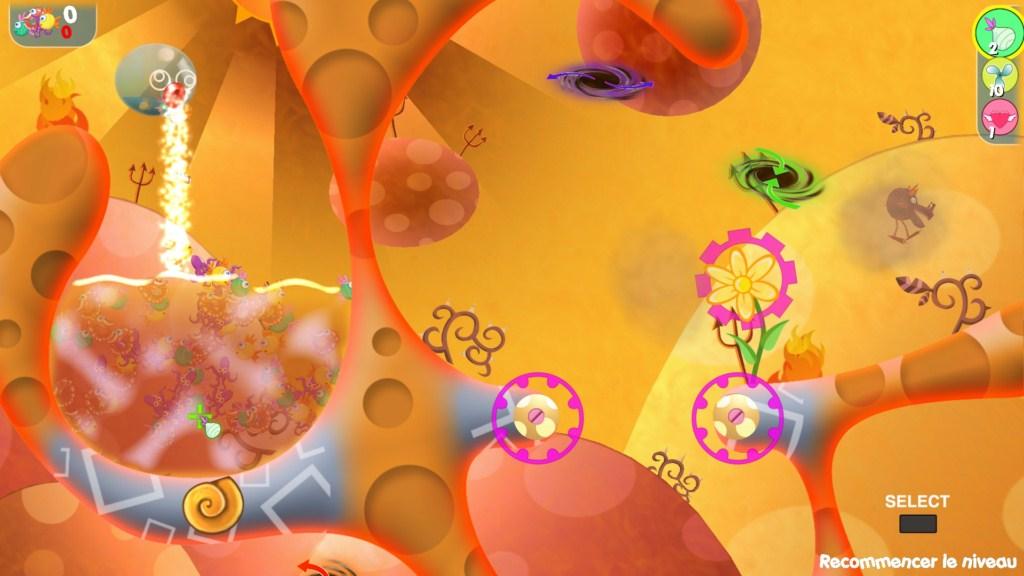
In addition to the story mode, players will also eventually gain access to both freeplay and challenge modes of the game. Freeplay is just as it sounds: instant access to any level in the game that you have previously progressed past in the story mode but with a few advantages. I use the term “progressed past” because the game offers players a chance to progress past a stage without completing the challenges set by the game. Players have access to 5 “Jokers”, or freebies, which can be used on any levels that may be causing them frustration or difficulty in their story mode progress. When a player uses a Joker on a stage, they are progressed to the next stage in the story mode. Once a Joker is used on a stage it is gone until you can beat that stage on your own in the freeplay mode. Levels are a little easier to beat in the freeplay mode because players are given the ability to spend any coins that they collect throughout their adventure on additional tools and items above and beyond what is provided in a given level. If you need an extra bomb beyond the three that the game gives you on a particular stage, you just buy another one using any money that you have stockpiled. This is particularly useful in stages that you may have used a Joker on to pass and will help you to put that Joker back in your inventory for use on later stages. The challenge mode of the game mimics the story mode of the game in terms of its actual stage progress but incorporates a slightly different gameplay requirement. You only need to rescue a single fish out of your starting 100 to progress past a stage in the challenge mode, but any fish lost along the way will be lost for good. This mode challenges players to make it through as many stages as possible using a single stockpile of 100 fish.
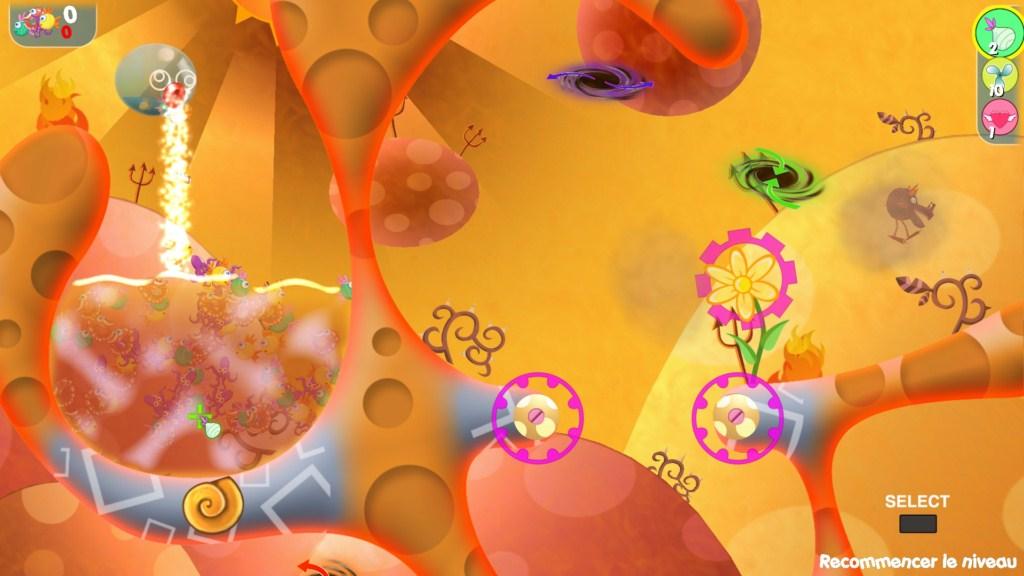
Your interaction with Aqua Panic’s world is pretty straight forward. Players will navigate a cross-hair around the environments and press the X button to activate either the environmental tool or selected tool in your possession. Before players start each stage, they are given the opportunity to move the camera around and inspect the level from top to bottom, designing their plan of attack. It is very helpful for players to do this and makes figuring out stages a lot easier than trying to do it on the fly with fish flowing and swimming about everywhere. Unfortunately, this feature only allows you to pan around the landscape of a level; it would have benefited the player a lot if the game would also allow players to zoom in and out to inspect variation sections of the level. Different stages provide you with different tools and players can cycle through them using the L and R buttons. It is a simple design that should work flawlessly, but it is unfortunately hampered by the graphical style and text resolution of the game. It is very difficult to decipher the number listed next to each of your tools regardless of the screen resolution that you are using; I have seen this issue come up in HD games running on SD televisions, but Aqua Panic seems to suffer from it regardless of the style of television that is in use.
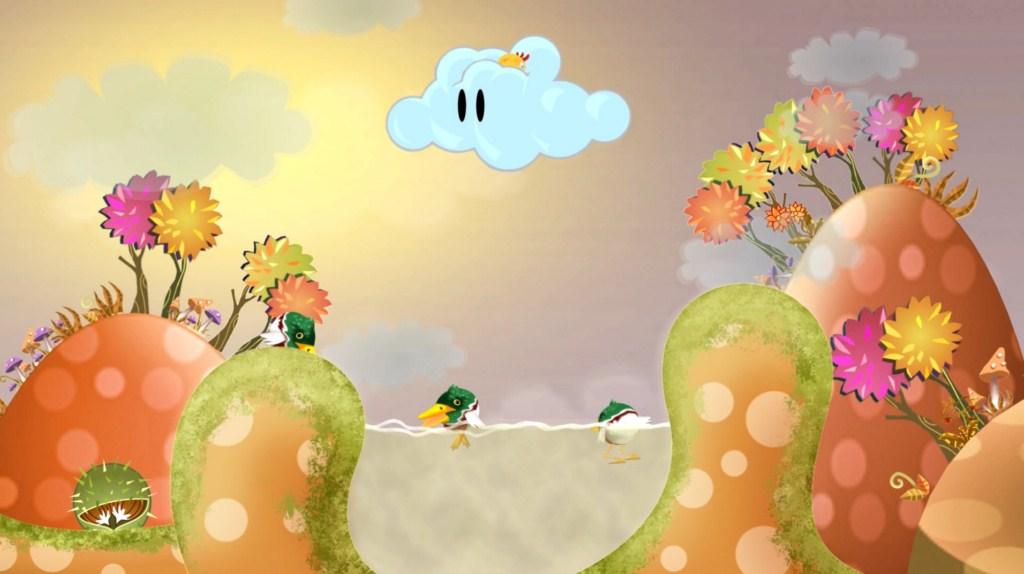
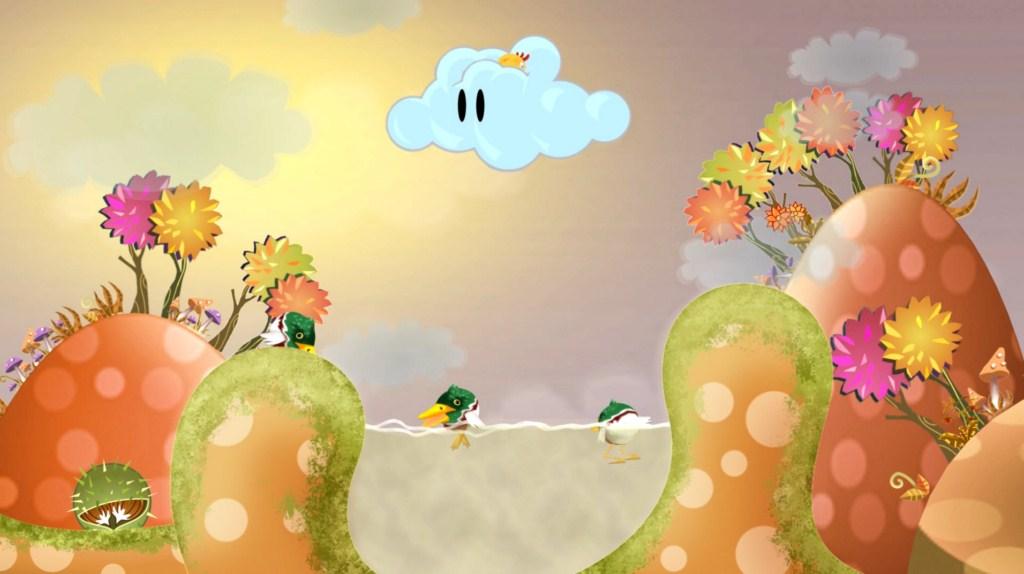
Aside from that graphical issue, which is a pretty big one, the rest of the game looks bright and colorful through a majority of the game. The graphical style looks like something ripped right off of the airwaves of a Nickelodeon cartoon meaning that it is very bright and animated. I do find the color palette used in the first environment to be a little bland and thought that some of the colors of the background objects blended together a bit, but this wasn’t a problem in the later stages of the game. This made it had to differentiate some items in the background on occasion but wasn’t a major gamebreaker. It is too bad that the same quality cannot be said for the game’s soundtrack which is extremely simple and monotonous; I found myself eventually muting the television and listening to music during my gameplay sessions rather than listening to the repetitive clicks and sounds emitted by the game’s stages and characters. Every aspect of the sound design is just “plain”, which is sad considering how much personality was put into the graphical style.
Aqua Panic sounds like it has a solid premise, and it does, but unfortunately there are a few gameplay mechanics that hamper the overall experience. First off there is an issue of difficulty. The game starts you off at a decent pace, beginning with some extremely simple challenges and eventually ramps up to some ridiculously complicated ones; perhaps “ramps” isn’t a good word to use, it is more like launches you up to them. Aqua Panic takes about 18-20 stages to set the stage for all that you need to do, introducing the various tools and puzzle mechanics, and then it lets your hand go and turns the difficulty level up to 11. The game gets hard, and fast; some of the stages from the 20’s onward are downright frustrating and annoying. The game that you experience early on is a far cry from the difficult puzzler that you play later in the game. I am not complaining about the difficulty personally, because I love a challenge, but I could see this being extremely daunting for more casual gamers. Most gamers would expect a game to slowly increase its difficulty, not crank the level up within a matter of stages.

The other problem that I found within the game is its unreliable physics system. Some of the stages require players to utilize and manipulate objects in the environment, particularly eggs, to help shape a desired path for their fish. Unfortunately, the eggs don’t fall in the same manner every time. It is very hard to predict how an egg is going to shift or fall when you blow up the ground around it which causes unwanted restarts in many stages. If becomes very frustrating when you ruin your chances of completing a stage disappear due to something completely out of your control. Perfectionists will undoubtedly grow very frustrated as this issue rears its head more than a few times throughout the game.
I had a lot of funny playing Aqua Panic, in short spurts. Unfortunately the charm and overall enjoyment of the game wore off during prolonged gameplay sessions. Eko has a solid premise here, but unfortunately some of the things that were built on top of said premise don’t display the same quality. Aqua Panic is an enjoyable little puzzle game, but nothing that is going to keep you entertained in the future. Gamers could spend their money on a lot worse, but then again, you could also spend it on a lot better.
Rating: 7.5 Above Average
* The product in this article was sent to us by the developer/company.



About Author
Guess who's back!!! If you have been here before, you know the basics: lifelong gamer, father, and of course, former certified news monkey. I still consider myself all of those things, just maybe not in the grand scale that I once did. I’ve been blogging on the industry for more than decade now, in some form or another. It wasn't until I landed here at Gaming Nexus that I really dove in head first. Now, writing about games has become what I do for fun (and sometimes work) and something I intend on doing until the day I die (in some form or another).
I'm a huge fan of just about everything you can interact with using a controller, no matter how old or new, good or bad. If you put it in front of me, I will play it (at least once).
