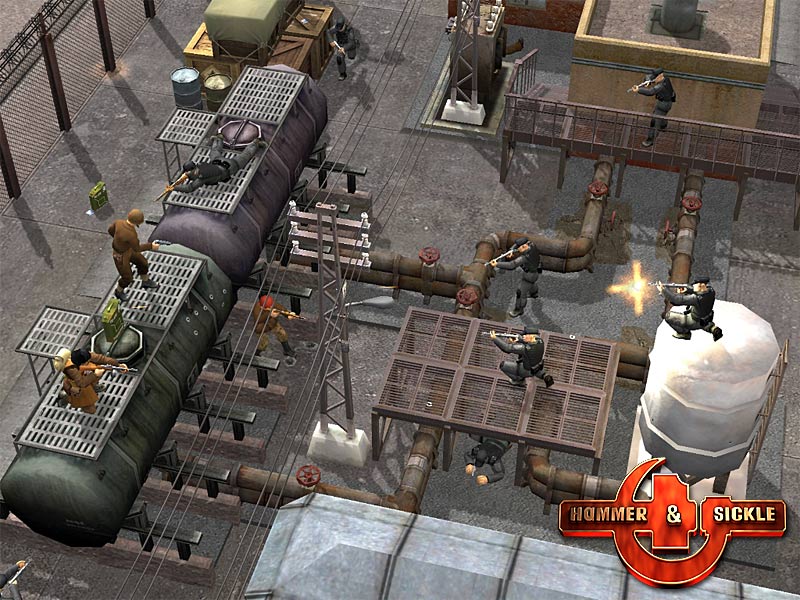
Hammer & Sickle
As the son of an Air Force intelligence officer I was a bit intrigued when I got the press release for the upcoming game Hammer & Sickle. Not only was the game set during the early stages of the Cold War but instead of taking the role as a spy for the NATO side you actually played the game from a Soviet perspective. Intrigued I contacted (he’ll say harassed) our PR person for CDV and he hooked us up with the following interview.
GamingNexus: Can you
introduce yourself and your role on the game?
Hello, I’m Mario Kroll, the Associate Producer for Hammer
& Sickle. I’m also the PR & Marketing Director for CDV Software
Entertainment USA.
GamingNexus: Could
you describe the plot of the game and the timeframe of the game?
Mario Kroll: Hammer
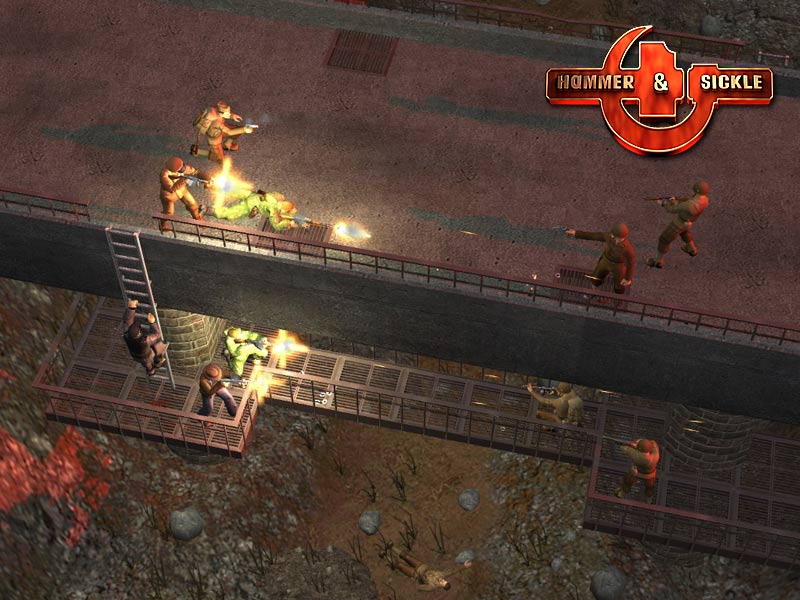
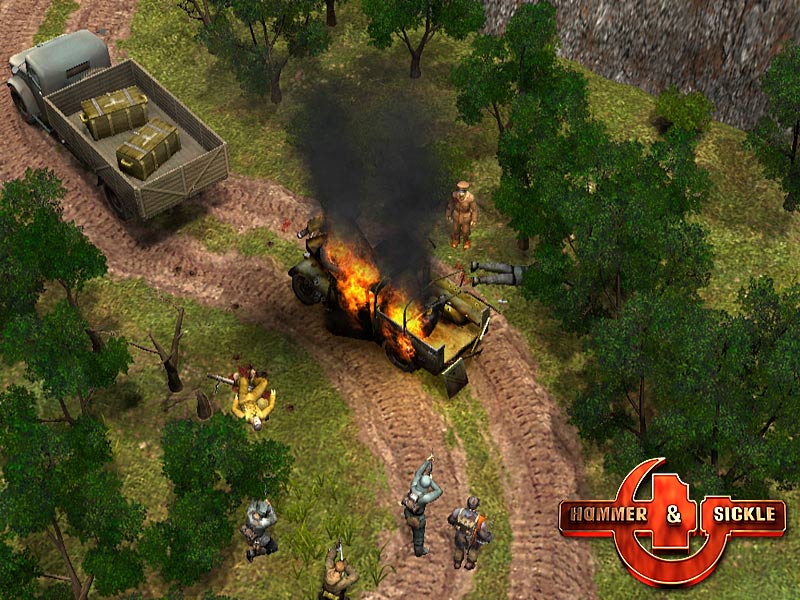
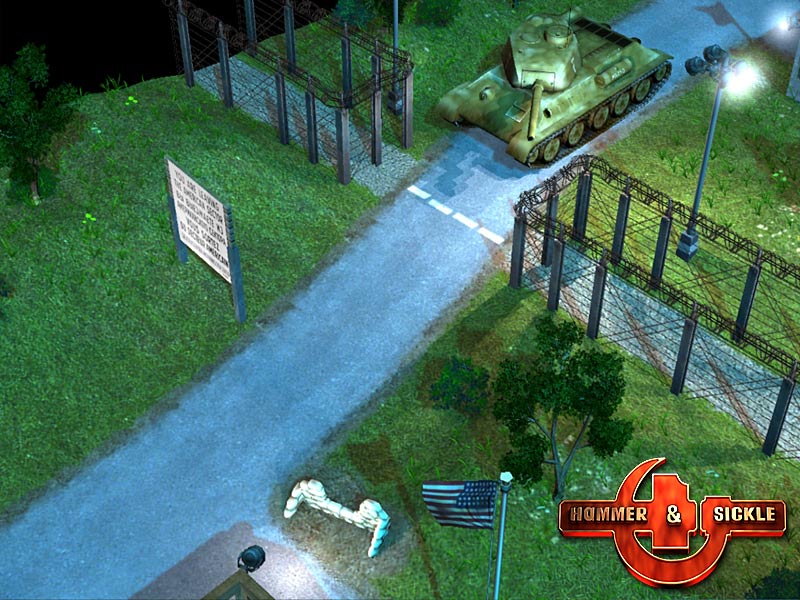
& Sickle takes place in 1949, primarily in the British-American sector of
post-World War II Germany. In the Second World War your alter ego was a Special
Forces soldier that was very successful fighting against the Germans from
inside the enemy’s territory. The war ended, all seemed peaceful and you
retired, so to speak. Suddenly you get a summons from a former superior, now
deep within the KGB, asking you to return to
GamingNexus: When people think of Cold War era spies, they usually think
of a character like James Bond, how does the main character in the game compare
to 007?
Mario Kroll: For starters, you are not confined to any one particular
character. You can create your own character in terms of appearance and
background (which translates into one of six specializations). While your
experience from a plot perspective is the same, how you look and what you are
naturally adept at is different based on your preferences. James Bond, in my
mind, is this sexy suave guy, almost with super-hero like charm and powers. Our
main character is a much more gritty soldier that happens to be good at both
killing and at spy tradecraft. How he develops and what he does after the game
begins is really up to you.
GamingNexus: The game
is billed as a tactical RPG, what exactly does that mean? Is it turned based game play or real time?
Mario Kroll: Hammer
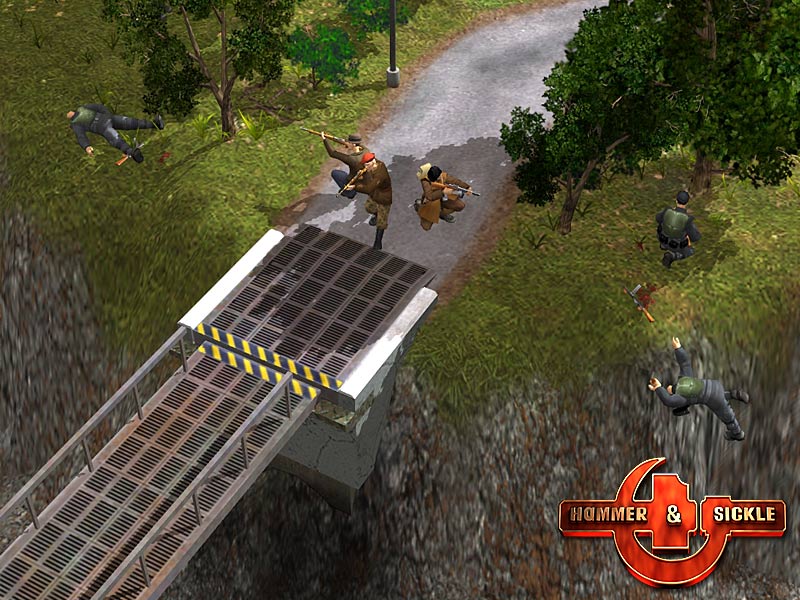
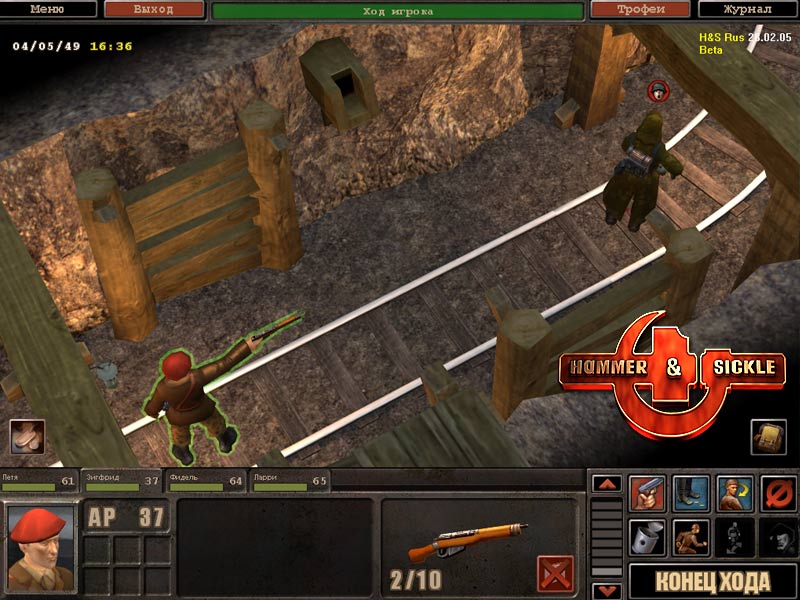
& Sickle is a real-time game during normal world exploration. Once you
enter combat, your decision making becomes tactical and action is turn-based.
You, your party members and your opponents begin to take actions that consume
action points and play out in sequence based on each character’s initiative.
This allows for a faster paced game as you learn about your environment and
investigate the main conspiracy. It also slows things down and allows you to
make carefully considered tactical decisions based on the combat at hand. We
feel that’s a great balance between speeding things up when you want to get on
with the story but also allowing you to think before you get your character or
your party killed simply because you can’t click fast enough.
Mario Kroll: Interaction
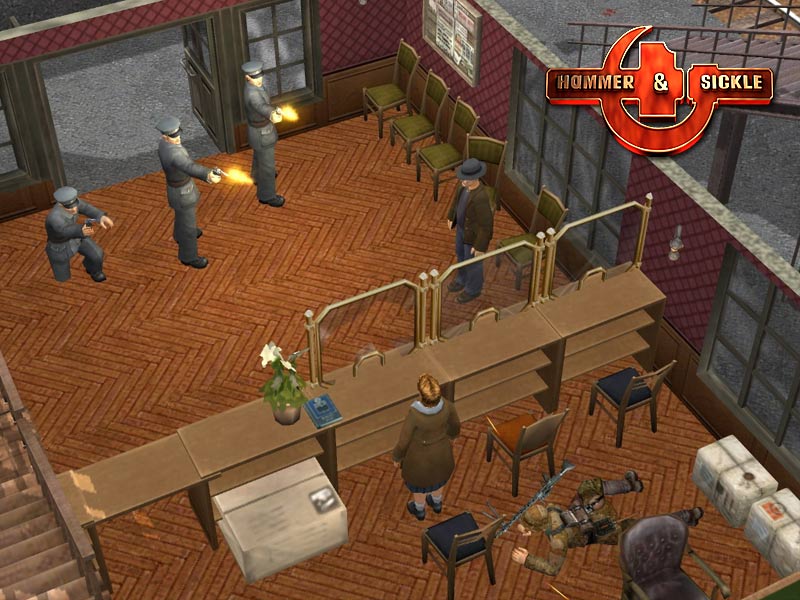
with NPC’s is through a dialog system. Whenever there’s an NPC that you’re able
to talk to (not everyone is friendly or interesting enough to talk with
<grin>) there will be an icon designating such. When you walk up to them
and start talking, you’ll hear and see their comments, to which you can choose
a reply from a list. This allows you to decide what sort of attitude you’ll
take towards the NPC. If you’re a smart-Alec back to them, then they’ll
probably not be very helpful, but if you’re too much of a suck-up, they might
likewise be turned off from talking to you. It all depends on their
personality, which you’ll learn more about the more you talk to them. Lastly,
as the game progresses, some NPC’s end up joining your party to become playable
characters that can make or break you in the game.
Mario Kroll: Hammer
& Sickle allows you to customize your character’s appearance, equipment and
skills to start. So you can choose from one of six character classes – Sniper,
Scout, Soldier, Grenadier, Medic or Engineer. Each class obviously has unique
benefits associated with it, and as you play the game, you’ll earn experience
points to increase your skills. We have a fully fleshed-out skill tree, just as
in other RPG’s, so your character truly develops as you play the game. You also, of course, will be able to collect a
wide range of equipment and weapons. The other component is the interaction
with NPC’s in the game world. How you respond to them determines not only the
makeup of your team or party, but also affects who will help or hinder you in
the game.
Mario Kroll: At
last count, we had over 40 potential missions. The missions are broken up by
maps, with most maps having a number of alternate paths and optional plots that
can be explored. The second map is a good example – while it’s one map, there
are eight missions within. There’s plenty to do on each map, and each “mission”
leads into the next, creating a chain of events which affects the overall
outcome of the game.
GamingNexus: What is
the role of the day/night sequence in the game?
What kind of time system is built into the game (real time, scale time)?
Mario Kroll: Day/night
cycles are part of the game, though they are accelerated. Most people don’t
want to sit on a nighttime mission for eight hours, so we sped things up quite
a bit. The cycles do affect mission progress by making it easier or harder to
complete tasks. One mission has you sneaking into an official’s house to steal
some documents. If you do it during the day, nobody’s home – making it easier
in some ways. If you sneak in at night, you risk running into the house’s
occupants, but you’ll avoid being spotted by pesky neighbors.
Mario Kroll: There
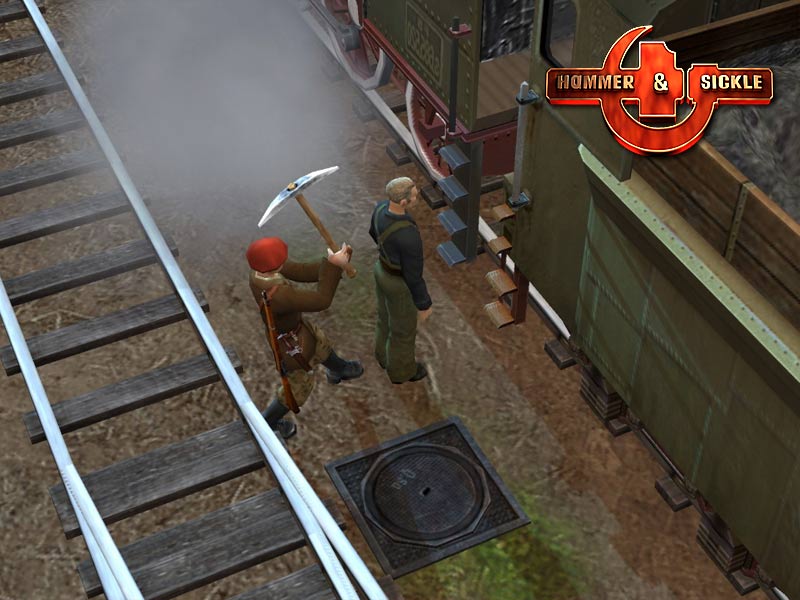
are more than 100 ranged weapons (pistols, rifles, stationary guns, etc.) and
there are 29 melee weapons in the game. The weapons were chosen from a list of
what was available during the timeline of the game to ensure realism. We have a
few spy gadgets and experimental weapons, but even those are as closely tied to
the real-world aesthetic of the game as possible.
* The product in this article was sent to us by the developer/company.





About Author
Hi, my name is Charles Husemann and I've been gaming for longer than I care to admit. For me it's always been about competing and a burning off stress. It started off simply enough with Choplifter and Lode Runner on the Apple //e, then it was the curse of Tank and Yars Revenge on the 2600. The addiction subsided somewhat until I went to college where dramatic decreases in my GPA could be traced to the release of X:Com and Doom. I was a Microsoft Xbox MVP from 2009 to 2014. I currently own stock in Microsoft, AMD, and nVidia.
