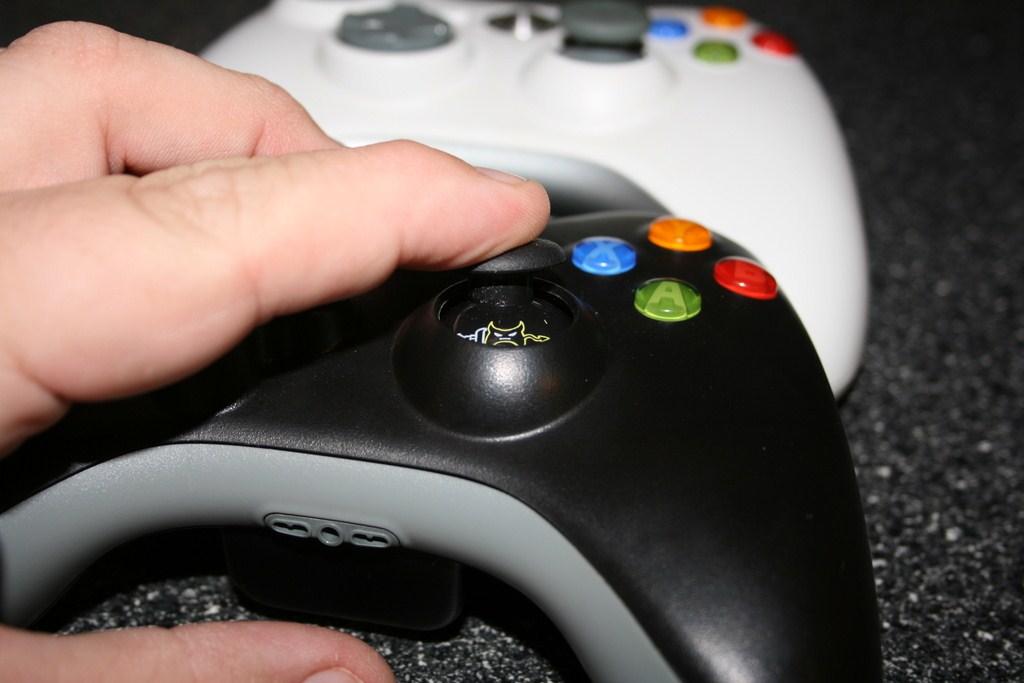
Evil D-Pad Impressions
The major complaint that gamers have had about the standard 360 d-pad is its unresponsiveness. The pad has a hard time detecting and registering subsequent direction inputs at a rapid pace. It works fine for standard directional inputs such as those required by most platformer and action games but often fails to acknowledge sequential inputs at a fast rate such as required in a fighting game. The result is a lot of frustrated gamers and unhappy customers of a particular genre.
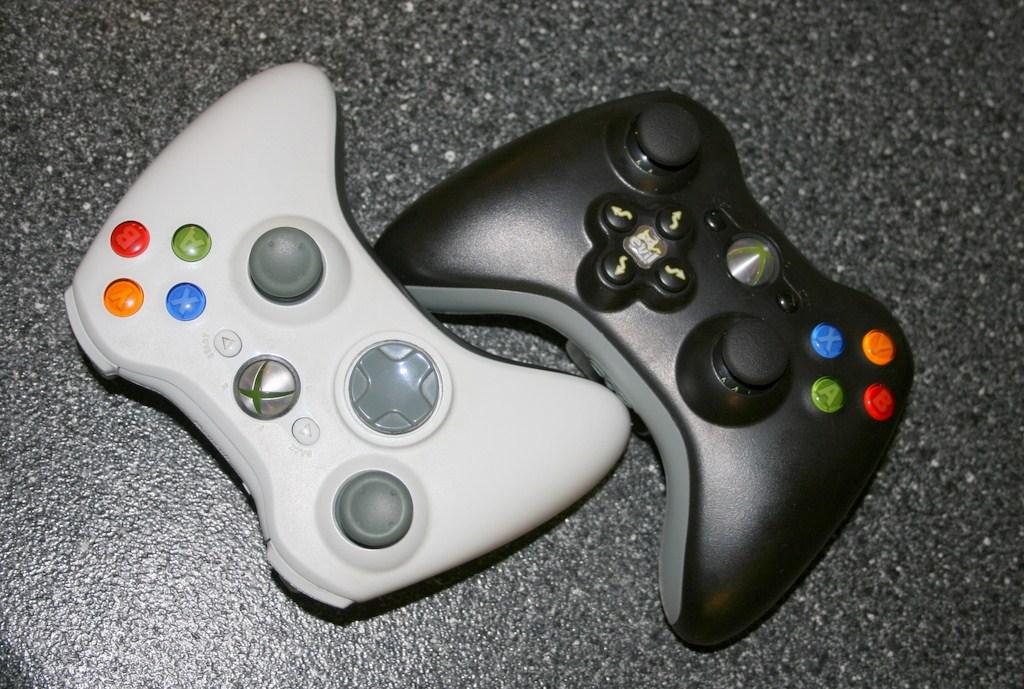
Users have narrowed the issue down to two problems that exist in the design of the standard directional pad. The first issue lies in the width and depth of the “well” that houses the the physical directional pad and holds it above its connections on the enclosed PCB board. This well does not give the pad enough room to physically move far enough in any given direction to register a directional press; basically, players are physically blocked by the controller’s design from moving the pad far enough for it to register a button press on the PCB contacts below. Because of the large depth of the well (in relation to the design), the directional pad would need to be moved quite a bit more than it physically can in order to firmly make contact with the board below. Numerous hacks and do-it-yourself fixes online recommend or involve sanding the inside of the well in order to allow more movement of the pad. This works in theory and provides some relief to the problem but doesn’t 100% resolve the issue at hand. Plus, any and all physical modification of the controller not only voids your manufacturer’s warranty but also puts your controller at risk of being broken. Even a faulty d-pad controller is better than no controller at all.
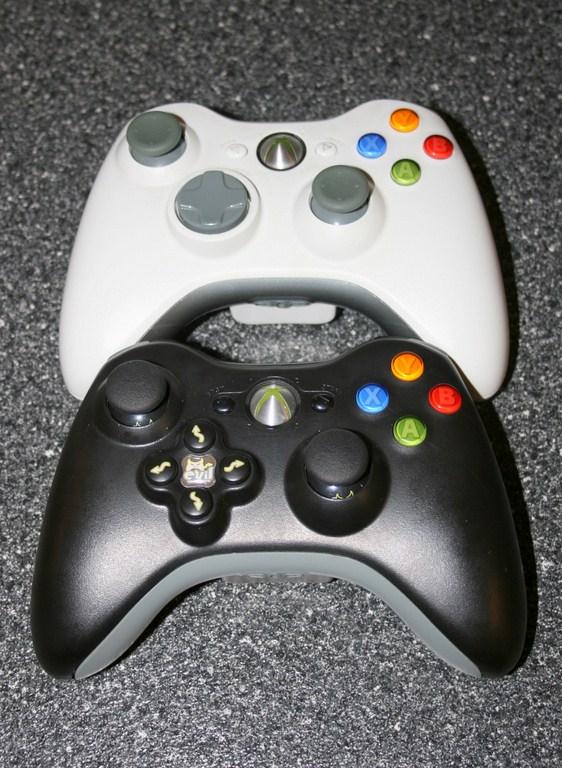
The other issue has to do with the physical design of the d-pad’s contacts on the bottom and how they are structured to move, or in this case, not move. The movement of the pad itself is limited by the design of its center post which limits its movement to something similar to a see-saw. When a direction is pressed, only the outside edge of the pad’s contact makes contact with the circuit board, resulting in an unreliable and unresponsive connection. If this post were redesigned to allow better movement, the pad could make a much much more secure contact with the circuit board and register a more reliable input.
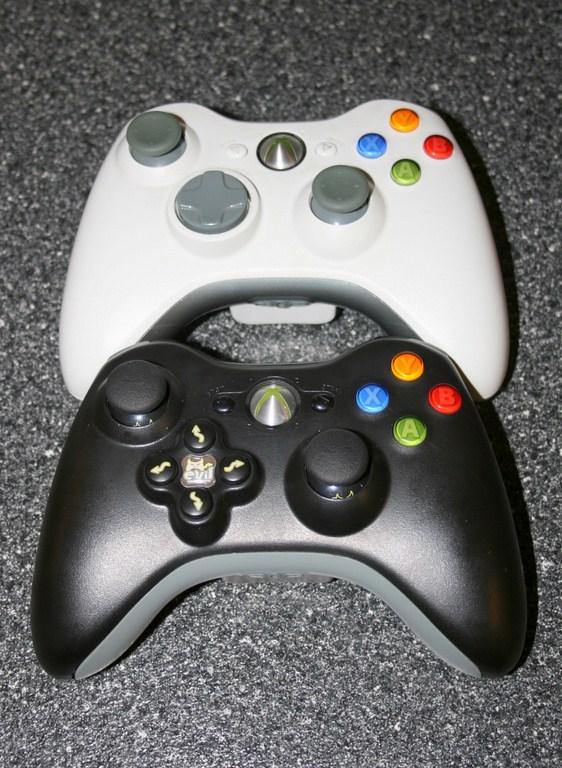
Recently, Microsoft has finally acknowledged the issues with the standard directional pad design and released an updated version to gamers earlier this month. The new design attempts to resolve the issue by utilizing an adjustable directional pad. The height of the d-pad can now be adjusted to suit the needs of the gamer. With simply a turn of the ring encompassing the directional pad or disc, the actual directional cross becomes more pronounced. This resolution is theoretically similar to the modification many gamers have used in sanding the outside of the well. All that is really being accomplished is that a little more room is being given to the pad to move in any given direction. Just like the mod, this provides a nice relief from the symptoms, but doesn’t cure the inherent problem.Enter the Evil Controller Evil D-Pad. Instead of settling for a slight design modification that will reduce the inaccuracy of the 360’s directional pad, Evil Controllers is offering a solution that it says completely eliminates it. The controller design eliminates possible errors by reducing the directional pad down to four separate buttons. Instead of the standard cross design, the Evil Controllers D-Pad consists of four buttons which are raised off of the face of the controller. The buttons are similar in size to those of the standard A, B, X, and Y buttons on the controller and laid out with the same spacing as the standard face buttons. Basically, you could look at it as if the controller has two sets of face buttons, but one corresponds to the directional pad inputs. That sounds good enough in theory, but just how well does it work?
The folks at Evil Controllers were kind enough to give me a chance to go hands on with this new design and put it to the test. During my time with the controller, I put it through a number of tests / games, spanning across a couple of genres in order to get a feel of the controller in differing types of games. Ergonomically speaking, the controller feels just as comfortable as a standard Xbox 360 controller. Most third party offerings are forced to use a slightly different physical design due to copyright and patent issues with the first party controller, but since Evil Controllers produces modified controllers and not their own manufactured ones, they can use actual first party controllers for the base of their design.
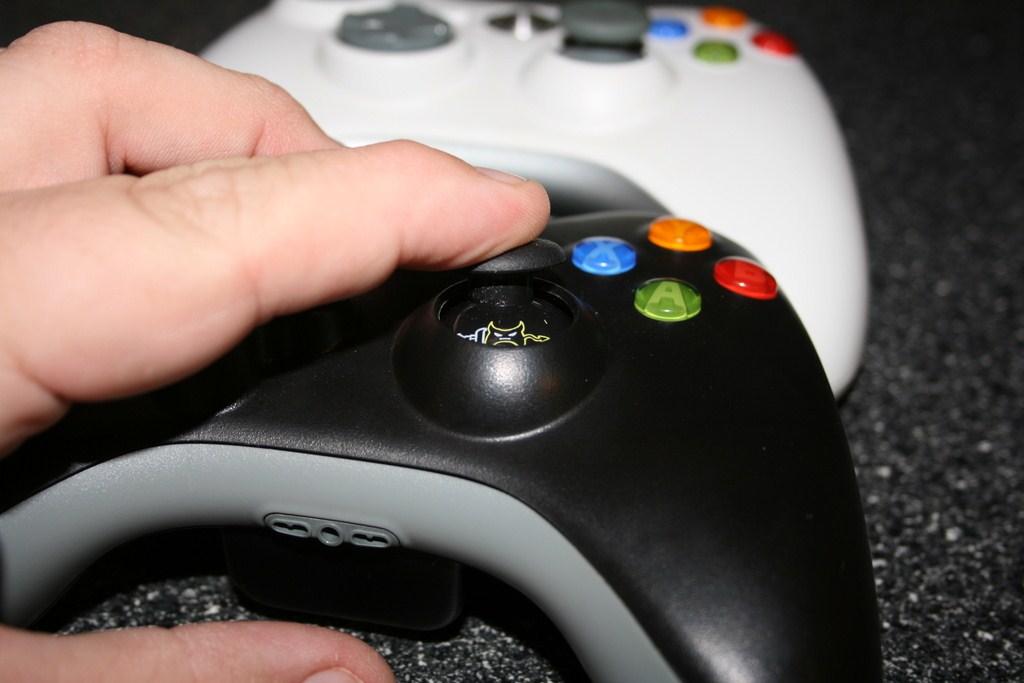
Aside from the new and improved directional pad design, I also feel the need to give them credit for the improved thumbsticks used on their product. The thumbsticks on the controller have been replaced with the Evil brand thumbsticks which I find to feel much “tighter” than the base design. The tightened design doesn’t make the sticks any harder to move per say, but they do feel as if they snap back to center with a stronger force than any other controller that I have used. Loose thumbsticks is one of my biggest pet peeves and personally, my major issue with Sony’s Dual Shock design. The tightened sticks made aiming (and sniping) in games like Medal of Honor and Modern Warfare 2 much easier and the ability to fine tune my aiming increased greatly. I played numerous levels in both games in order to test out the sticks after discovering their improved design only to become more and more impressed as I used them over time. While the sticks are highly appreciated, we are here for the directional pad. Think of the highly improved sticks as a bonus feature... I did.
The main attraction of the Evil D-Pad controller is the new and improved d-pad design, and let me assure you that it works well. To get the best experience and benefit from the Evil design, I played numerous games of Altered Beast and Pac-Man Championship Edition for the Xbox Live Arcade, as well as many, many rounds of Super Street Fighter IV. I switched back and forth between the Evil D-Pad controller and a standard 360 controller throughout my testing to constantly compare the performances of both.
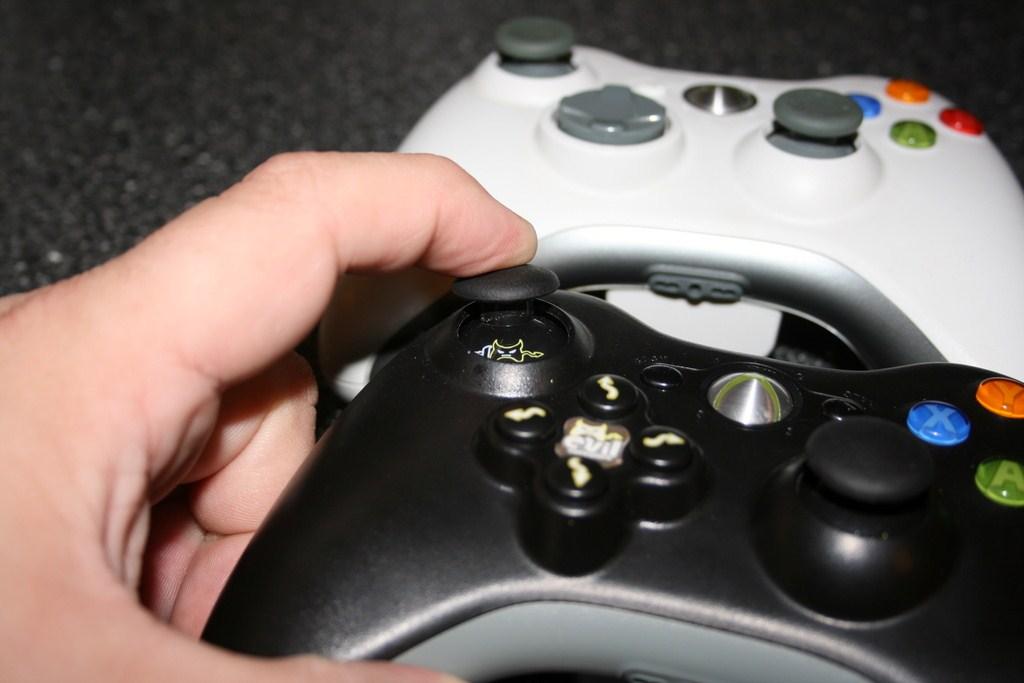
The thought behind testing out Altered Beast was to spend some time with a game that was designed to be used solely with the d-pad. Since the XBLA version of the game is a direct port of the Sega Genesis classic, I figured it was as good of a candidate as any plus I wanted to get my retro fix. At first, the Evil design feels a little awkward but highly responsive. I found the response times for my inputs in the game to be a lot faster with the Evil D-Pad. It was a lot easier to transition from a walking directly into a crouching position to handle enemies that required lower attacks. I always seemed to have bad luck in those situations with the standard controller and usually end up taking a hit or two during the course of the level; that didn’t happen this time though. The same response benefits were noticeable in Pac-Man Championship Edition as well. I found that using the Evil D-Pad resulted in much betters performances than I usually displayed. I rarely missed turns using the four button set up and increased my high scores on nearly every single course of the game.
The true benefit of the controller was felt when I entered into the fighting game world with Super Street Fighter IV. This controller is almost perfect for games such as this when it comes to my playing style, but I fear other players may not be as favorable. Despite the improved performance that I experienced, there is a caveat though. This benefit doesn’t come without a major learning curve when it comes to dealing with four separate buttons that are spaced as far apart as the Evil D-Pad. While the response times of the pad were greatly reduced, the spacing of the buttons created a hurdle for me early on. Performing moves such as a Dragon Punch or standard fireball motion felt foreign for quite a while; once I got used to the spacing though, I questioned how I could ever go back to the standard design. Unfortunately, the same thing cannot be said for those characters that used circular movements such as Zangief and T. Hawk. Even after prolonged exposure to the pad, I found myself struggling to perform such maneuvers while I could still pull them off at will with the standard design. I found the difficulties that these maneuvers posed to me to be caused solely on the spacing of the directional buttons. When I played the same game on a PlayStation 3, which uses a similar directional pad design, I could pull the moves off at will. The performance on the Dual Shock 3 controller were even better than what I experienced with the standard 360 controller. The long and short of it is, the buttons that compromise the four directional inputs feel too far apart. The spacing that is used on the standard face buttons exists to ensure that it isn’t easy to unintentionally press more than one button simultaneously; the Evil D-Pad uses that same spacing for its directional buttons which makes it a little difficult to press directional buttons at the same time as is required by numerous fighting games, especially complete circles. While this spacing serves a purpose in the layout of face buttons, it proves detrimental to the experience when being used for directional input.
It takes quite a while to get used to the feel of the spacing. Don’t get me wrong, it felt a lot better and was a lot more responsive than the standard pad, but it still felt “foreign” in the end. If buttons that are used for the directional pad were altered to feel physically different from the standard face buttons, both in actual size and spacing, this feeling could almost completely be eliminated. Perhaps this is something that Evil Controllers will consider in future redesigns of the model.
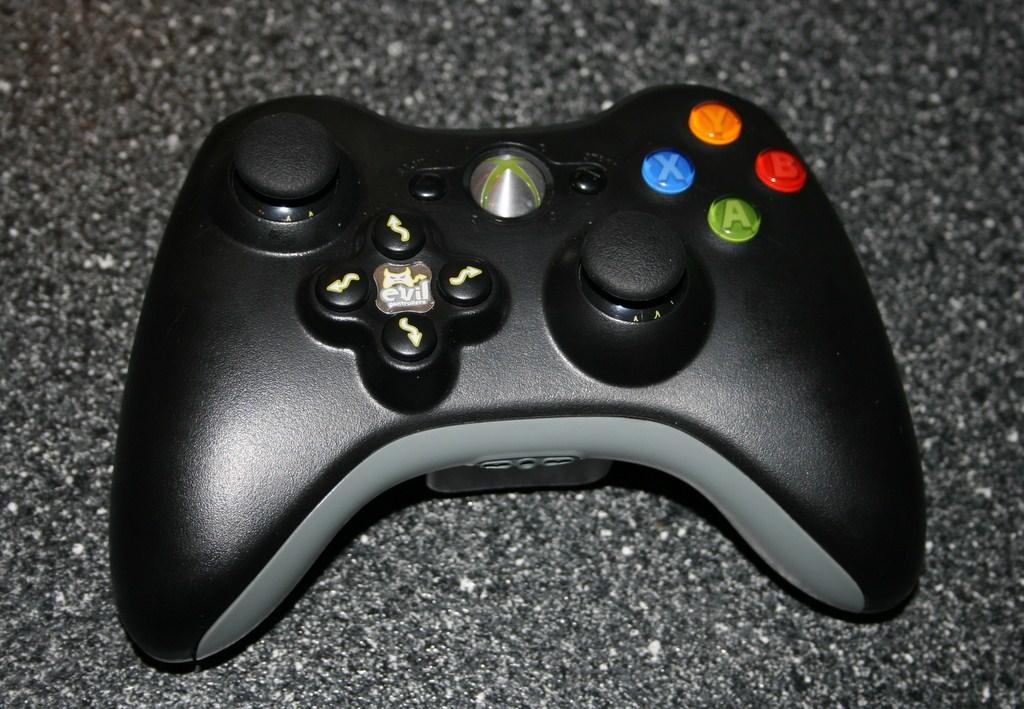
Aside from the button spacing, the only other concern that I have with the controller lies with the price point. Now, I fully admit that the price point isn’t a reflection of the product’s functionality and shouldn’t be considered when critiquing its functionality. At the same time, I also have to take the value of the product into consideration, which forces me to at least mention the pricing. The price point of an Evil D-Pad controller is marginally higher than that of a standard Xbox 360 controller. Evil Controllers markets the wireless version of the controller for $84.99 and the wired version for $64.99. Even though you are paying a bit of a premium on top of the price of a standard controller, your are buying a quality product. Evil Controllers uses new, official Microsoft branded controllers for the base-unit of all of their products. It becomes a matter of whether or not you are willing to put down the cash for the solution to your d-pad problems. The product description doesn’t lie, this controller works like a charm, but you are going to have to decide if solving your d-pad dilemma is worth the price of admission.
As I said, the Evil D-Pad branded controller works like a charm. The new directional interface results in extremely accurate results and a major reduction in overall inaccuracies. I must admit that it does take a little getting used to as the feel is completely different from that of a standard and tradition d-pad design. Once I adjusted to the new “feel” though, I felt right at home and had no problem pulling off the various moves and combinations in my favorite fighting games. That speaks sole on my fighting / playing style though, other players, namely those who use character swith circular-motion moves, may not find it as beneficial. If you are willing to pay the price for an Evil Controller, and your fighting style is similar to mine, you won’t be disappointed with this purchase.
* The product in this article was sent to us by the developer/company.




About Author
Guess who's back!!! If you have been here before, you know the basics: lifelong gamer, father, and of course, former certified news monkey. I still consider myself all of those things, just maybe not in the grand scale that I once did. I’ve been blogging on the industry for more than decade now, in some form or another. It wasn't until I landed here at Gaming Nexus that I really dove in head first. Now, writing about games has become what I do for fun (and sometimes work) and something I intend on doing until the day I die (in some form or another).
I'm a huge fan of just about everything you can interact with using a controller, no matter how old or new, good or bad. If you put it in front of me, I will play it (at least once).
